
Choosing a countertop is one of the most important decisions in any kitchen or bathroom remodelling. The right material, finish, and edge profile will shape the space’s aesthetics, longevity, and upkeep , all while with the need to fit a limited budget. This article prove essential information from countertop material to designs ad edge profiles so you can understand the board aspects on countertop options and deside the best fit for your project.
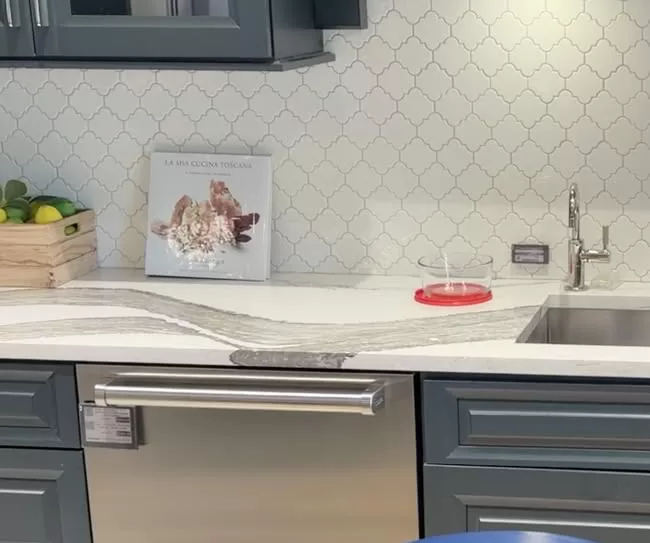
Countertop Materials Overview
- Three decision pillars: material, surface finish, and edge profile.
- Materials fall into three broad groups: Natural stones, Engineered materials, and Other materials.
Natural Stones
Natural stone delivers timeless beauty but often requires extra care.
| Natural Stone | Pros | Cons |
|---|---|---|
| Granite | • Wide color range • Heat‑ and scratch‑resistant • Durable | • Needs periodic sealing • Visible seams on large layouts • Can be pricey |
| Quartzite | • Harder than granite • Marble‑like veining • Heat‑ and scratch‑resistant | • Must be sealed • Limited color palette • Expensive |
| Marble | • Luxurious look • Cool surface ideal for baking • Variety of colors | • Very porous • Stains, scratches, etches easily • High maintenance |
| Soapstone | • Matte feel • Heat & stain resistant • Develops patina • No sealing needed | • Softer, prone to dents • Limited color range • Costly |
| Limestone | • Warm, earthy tones • Cool to touch • Fossil patterns | • Highly porous • Stains, scratches, etches • Best for low‑use areas |
| Onyx | • Translucent, back‑lit effect • Unique visual statement | • Extremely soft & brittle • Prone to chipping/staining • Very expensive |
| Travertine | • Warm, earthy texture • Finish options (honed, polished, tumbled) | • Porous, requires sealing • Etches with acids • Less durable for heavy kitchens |
Engineered Materials
Engineered options blend performance with design flexibility.
- Quartz (engineered stone) – Non‑porous, no sealing; resists stains, scratches, bacteria; broad color palette; may scorch with hot pans; heavier than many alternatives.
- Corian (solid surface) – Seamless installation; non‑porous, low‑maintenance; scratches can be buffed out; less luxurious feel; can scorch.
- Porcelain slabs – Highly heat, stain, scratch, and UV resistant; thin, lightweight; mimics stone; edges can chip; requires specialized fabrication.
- Recycled glass – Eco‑friendly, vibrant look; non‑porous and easy to clean; can chip under heavy impact; pricier than mid‑range stone.
Other Materials
These alternatives often prioritize cost or specific aesthetics.
| Material | Advantages | Disadvantages |
|---|---|---|
| Concrete | Customizable color/shape; modern industrial look; durable | Prone to cracking; porous → needs sealing; heavy – requires strong support |
| Butcher block (wood) | Warm, natural feel; refinishes easily; affordable | Requires regular oiling; stains, scorch, warps; harbors bacteria |
| Laminate | Most budget‑friendly; huge color/pattern range; lightweight | Scratches, burns, chips; seams noticeable; low resale impact |
| Metal (stainless steel, zinc, copper) | Industrial/professional vibe; heat‑ and stain‑resistant; antimicrobial (copper/zinc) | Scratches/dents easily; “cold” appearance in homes; higher cost |
| Tile | Budget‑friendly; heat resistant; replaceable individual tiles | Grout stains/bacteria; uneven surface – not ideal for baking; tiles can chip |
| Terrazzo | Customizable, artistic; durable, seamless cast | Expensive installation; cement‑based versions can crack; heavy |
Countertop Finishes
Finishes affect texture, sheen, and maintenance.
| Finish | Description | Typical Materials | Pros | Cons |
|---|---|---|---|---|
| Polished (high gloss) | Shiny, reflective surface | Granite, marble, quartz, porcelain | Enhances color depth; easy to clean | Shows fingerprints, may be slippery |
| Honed (matte/satin) | Smooth, low‑sheen | Marble, quartzite, limestone | Soft look; hides etches | More prone to staining |
| Leathered (textured matte) | Slight texture, soft sheen | Granite, quartzite | Conceals minor scratches; tactile feel | Slightly lower gloss |
| Flamed | Rough, exposed‑grain texture (heat‑treated) | Granite, hard stones | Slip‑resistant; highlights stone grain | Can be uneven, may chip |
| Brushed / Antiqued | Wire‑brushed, aged surface | Similar to leathered | Subtle texture; classic look | May hide fine detail |
| Caressed | Mix of leathered + polished highlights | Selected stones | Balanced aesthetics | More expensive |
| Satin / Eggshell | Low‑sheen hybrid | Quartz, solid surfaces | Modern look; hides wear | Less dramatic |
| Thermal / Sandblasted | Rough, weathered texture (heat or blasting) | Stone & engineered slabs | Rustic appeal; slip‑resistant | Can be uneven, harder to clean |
Edge Profile Options
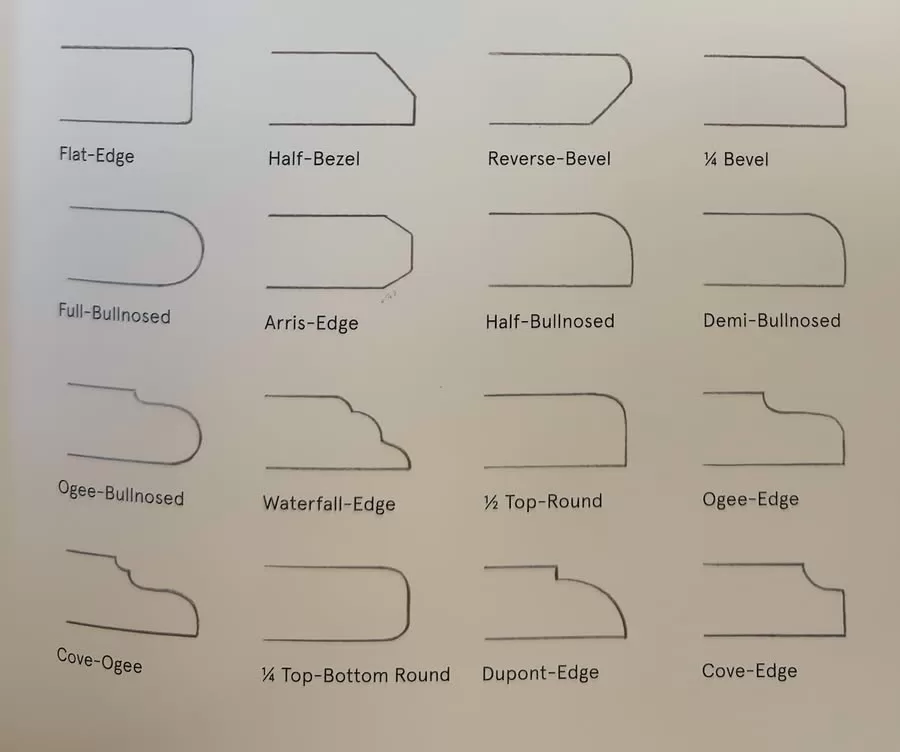
Edge profiles influence both safety and style. The guide lists a comprehensive range (N1‑NL21). Key families:
- Standard eased (N1) – Simple, low‑profile rounding; easy to clean.
- Rounded profiles (NL2‑NL3) – Small to medium radius; softer look.
- Bullnose family (NL6‑NL7) – Full or demi curvatures; safe for children.
- Bevels (NL13‑NL16) – Angled edges; adds visual contrast.
- Cove profiles (NL10‑NL12) – Concave shape; soft shadow line.
- Specialty (NL8 Dupont, NL9 Roman Ogee, NL18 Dupont w/Stepped Cove, NL20 Ogee w/Stepped Bullnose, NL21 Triple Pencil, NL19 Hand‑Chiseled) – Decorative or historic motifs for high‑end designs.
Selecting an edge depends on the intended usage (e.g., families may prefer rounded or bullnose for safety) and design intent (e.g., bevels for sleek modernism).
Study Tip: Create a quick reference card with the three columns (Material → Finish → Edge) and tick the combos that meet your project’s priorities—budget, durability, and style. This “matrix” approach mirrors the guide’s organization and speeds up decision‑making for exams or client presentations.