
If you’re buying vinyl flooring at scale, the biggest risk isn’t picking the “wrong color.” It’s approving a factory that looks great on the first batch—then watching quality fade and paperwork get fuzzy when your customers ask for proof.
This checklist is for US-focused importers and private-label buyers. Use it to shortlist a vinyl flooring factory, validate specs, and run a repeatable audit + vinyl flooring quality control workflow.
- Confirm you’re dealing with the right kind of factory
- Lock the vinyl flooring specs that prevent surprises
- For US buyers, treat FloorScore and standards like a validation exercise
- Vinyl flooring factory audit checklist (what to check on-site)
- QC checklist across production (IQC → in-process → PSI)
- Red flags that predict “quality fade” after approval
Step 1: Confirm you’re dealing with the right kind of factory
Before you talk specs, confirm who you’re actually buying from.
Ask for: business license, factory address, production location(s), and the name on certificates/test reports.
⚠️ Warning: If the certificate holder name doesn’t match the manufacturer name and address (or the supplier can’t explain why), treat it as a verification problem—not a paperwork detail.
Quick yes/no checks
- Same entity: The company name on the proforma invoice matches the name on test reports and certifications.
- Clear production scope: They can show which lines produce SPC/WPC/LVT and what’s subcontracted.
- Traceability exists: They can explain how they track raw materials and batches from incoming materials to packed cartons.
- Vinyl flooring factory audit checklist (what to check on-site)
Step 2: Lock the vinyl flooring specs that prevent surprises
For US buyers, “commercial grade” isn’t a spec. You need measurable requirements that show up in sample approvals and in test reports.
1) Wear layer thickness (mils)
The wear layer is the clear top layer that takes the scratches, stains, and abrasion. It’s commonly measured in mils (1 mil = 0.001 inch).
Buyer rule of thumb: many industry guides treat 12 mil as a reasonable residential baseline and 20+ mil as more appropriate for higher-traffic/light commercial applications (assuming the rest of the construction supports it). One accessible reference is The Floor Store’s guide to wear layer thickness (mils).
What to verify
- Wear layer thickness is stated in the spec sheet and consistent on physical samples.
- Abrasion testing is documented (ask what method and conditions were used; “Taber abrasion” is commonly referenced).
2) Total thickness (mm)
Total thickness affects feel underfoot and tolerance to minor subfloor imperfections more than surface durability. For a quick framing of common ranges, see the overview of typical LVP thickness ranges.

What to verify
- Thickness is measured on samples (not just stated).
- If using click-lock, confirm the locking profile is robust enough for your install environment.
3) Core type: SPC vs WPC vs LVT
This affects dent resistance, dimensional stability, and how the product behaves under temperature swings.
- SPC (stone polymer core) is generally chosen for rigidity and stability—what many buyers mean when they say they’re looking for an SPC flooring factory.
- WPC is often chosen for comfort and acoustic benefits.
- LVT (flexible) can be a fit for glue-down systems, but you need tighter control on substrate and adhesive.
What to verify
- The factory can state the build-up clearly (core composition, density targets, backing/underlayment).
- The core type you’re buying matches the core type on the test report.
4) Dimensional stability (the “will it gap or buckle?” test)
Dimensional stability is where cheap production shows up—especially when the product is shipped across climates.
Ask for: a dimensional stability report and the standard used (buyers commonly see ASTM F2199 referenced for resilient products).
5) Scratch and stain performance
If you sell into retail or multifamily, scratch complaints and staining are return-generators.
What to verify
- The factory can explain the coating system (e.g., UV coating), and how they control it in production.
- Chemical resistance / stain resistance is supported by test reports (ask which standard and what chemicals were used).
6) Slip resistance (don’t rely on marketing adjectives)
“Slip resistant” needs a test method behind it, and a clear scope (dry/wet conditions, surface type).
What to verify
- The supplier provides the test method and conditions.
- The requirement matches the real use case (dry vs wet areas, residential vs commercial).
Step 3: For US buyers, treat FloorScore and standards like a validation exercise
FloorScore (low-VOC / indoor air quality)
If you sell into healthcare, multifamily, schools, or any retailer with an IAQ spec, you’ll hear the phrase FloorScore certified vinyl flooring. FloorScore is a widely recognized indoor air quality certification for hard surface flooring. It evaluates VOC emissions using California Section 01350 criteria. Start with the program’s own explanation on what FloorScore is and the certification details from SCS Global Services’ FloorScore program.
How to validate a FloorScore claim (practical checklist)
- Certificate lookup: confirm the manufacturer/product in the official listing (don’t accept a PDF screenshot as “proof”).
- Product scope: verify the exact collection/SKU and construction are covered.
- Dates: check issue and expiration; confirm renewals.
- System scope: if you sell a full installation system, confirm what’s certified (flooring only vs flooring + adhesive/underlayment).
Pro Tip: Ask the factory how they prevent “certificate drift”—where the certified sample build differs from the build running on the line six months later.
ASTM / EN standards: what matters is the test report quality
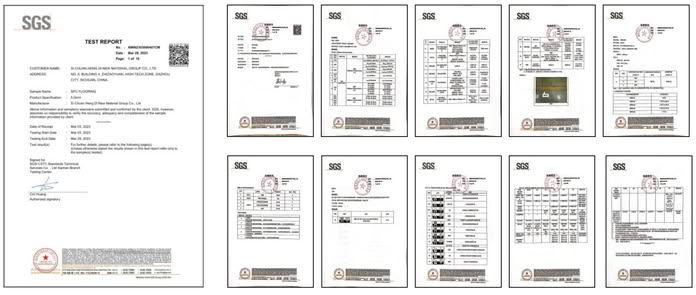
A credible factory won’t just name standards—they’ll provide test reports with:
- the standard number (e.g., ASTM/EN/ISO)
- the method conditions
- the test lab name
- the test date
- and the exact product build covered
If you need a starting point for what exists, ASTM publishes a reference hub for resilient floor covering standards. On the EN/ISO side, wear classification is often discussed via EN ISO 10581/10582 context; ERFMI’s note on EN ISO 10581 wear classification is a useful orientation document.
Step 4: Vinyl flooring factory audit checklist (what to check on-site)
A factory audit is less about catching one bad batch and more about proving the vinyl flooring manufacturer can hold a spec consistently.
A. Capability and process control
- Production lines: confirm how many lines run your product type (SPC/WPC/LVT) and what the bottlenecks are.
- Calibration and measurement: check how thickness and critical dimensions are measured and how often tools are calibrated.
- Change control: ask what triggers a process change (material supplier change, formula tweak) and how it’s documented.
B. Materials and traceability
- Incoming materials: verify they record incoming inspections and quarantine nonconforming materials.
- Batch traceability: confirm they can trace a carton back to a production batch and material lots.
C. Lab and third-party testing workflow
- Do they have an in-house lab? If yes, what tests are run in-house vs outsourced?
- How do they decide re-testing frequency after a spec change?
D. Packaging and shipment readiness
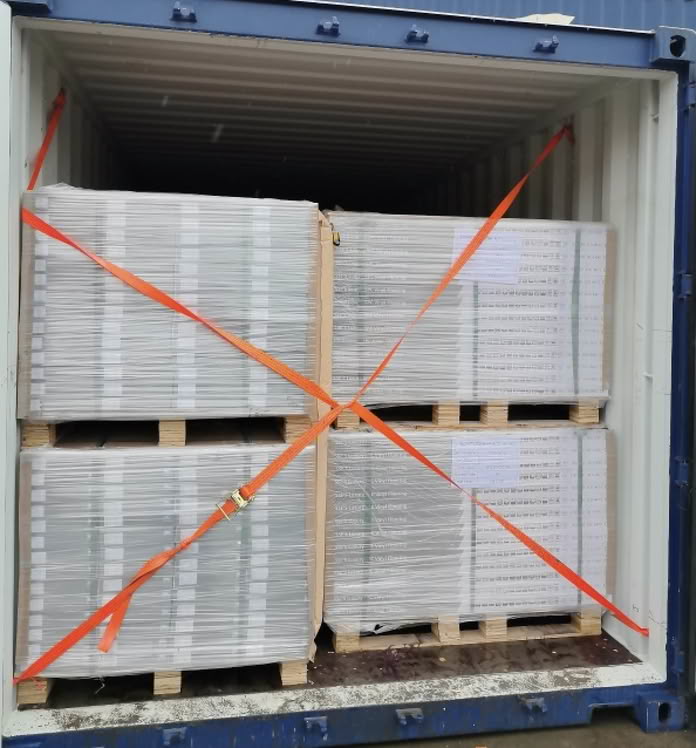
Even a good product becomes a claim if it arrives damaged.
- What corner/edge protection is used?
- How do they prevent carton crush and pallet shifting?
- What is the humidity/temperature control plan during storage (if any)?
Step 5: QC checklist across production (IQC → in-process → PSI)
This is where many buyers get burned: they audit once, approve once, and assume consistency. A better approach is a simple, repeatable QC spine.
Incoming QC (IQC): prevent defects before they become “built in”
Verify the factory does these, every time:
- Incoming inspections are logged (pass/fail), not “checked verbally.”
- Key raw materials have COAs and are matched to the batch.
- Nonconforming material is quarantined and dispositioned.
In-process QC: control the steps that create irreversible defects
Match checkpoints to failure modes:
- Thickness and dimensional checks at defined intervals
- Visual checks for surface defects (scratches, contamination, print alignment)
- Click/lock integrity checks (if applicable)
Pre-shipment inspection (PSI): prove the order matches the approved spec
At PSI, you’re verifying the finished goods are consistent and shipment-ready.
PSI should include:
- A sampling plan (commonly AQL-based for repeating orders; tighter controls for first orders)
- Critical-to-quality checks: wear layer, thickness, appearance, locking profile, carton labeling
- Packaging and pallet checks to reduce transit damage
Step 6: Red flags that predict “quality fade” after approval
- Test reports without product build details (or reports that look reused across collections)
- Certifications that can’t be validated in official databases
- No traceability story (they can’t answer “which batch made this sample?”)
- Resistance to factory visits or third-party inspections
- Spec changes without documentation (“We upgraded the formula” is not a controlled process)
Next step: turn this into your supplier scorecard
If you’re building a shortlist of factories, turn the sections above into a one-page scorecard:
- Specs (pass/fail)
- FloorScore validation (pass/fail)
- Standards + test report quality (pass/fail)
- Audit readiness (pass/fail)
- QC spine (pass/fail)
For more supplier-selection background, you can reference: Top LVP manufacturers in China for floor importing business and 2026 best of best vinyl flooring products in China.
Finding Reliable Supplier
By now, if you have followed the steps mentioned above, you should be able to narrow down potential vinyl flooring suppliers for your business. By building a through factory inspection checklist, you can better ensure you are getting the ideal suppliers that support your vinyl flooring business.
Need Support?
If you want a second set of eyes on your shortlist, Sreelance Material Technology can help you structure a factory audit and QC plan. Share your target spec (wear layer, thickness, core type), intended use case, and the certificates/test reports you’ve received so far.