
Large-scale residential builders and high-volume commercial developers balance visual appeal against tight budgets daily. Sourcing materials from overseas offers an exceptional avenue to drive profit margins higher, though the process demands careful execution. Finding a trusted hardwood flooring supplier is the single most vital step when importing premium rustic flooring.
Partnering directly with a global hardwood flooring supplier grants access to CD grade engineered planks that deliver rich, natural aesthetics for a fraction of what AB grade alternatives cost. This guide outlines the precise steps for sourcing, verifying, and importing these profitable materials safely. Adopting these methods will protect your investment and simplify your inventory acquisition.
Many buyers worry about the risks tied to lower-grade lumber; though the grades of veneers have nothing to do with the quality itself but merely a preference in designs and styles. CD grade flooring features filled knots, mineral streaks, and varied grain patterns that deliver a highly sought-after rustic character. These unique market preferences stand for niches that keep flooring brands differentiated from the competitors. Therefore, by securing a reliable supply chain in different grades of engineered flooring helps the business to remain competitive in the flooring market.
| Wood Grade | Knot Tolerances | Sapwood Allowance | Color Variation | Relative Cost | Ideal Application |
|---|---|---|---|---|---|
| AB Grade | Maximum 5mm sound knots only | None permitted | Minimal natural variation | Premium High | Luxury residential and minimalist modern spaces |
| ABC Grade | Sound knots up to 20mm allowed. | Up to 5 percent permitted | Moderate natural variation | Medium | Standard residential projects and retail stores |
| CD Grade | Unlimited knots up to 50mm allowed | Unlimited sapwood permitted | High rustic variation | Highly Economical | Rustic themed designs and high-volume multi-family developments |
Global demand for character-grade hardwood flooring has risen steadily over the past decade as design trends shift back and forth with different level of natural, organic textures. Today, modern homeowners and commercial designers embrace the unique story told by the distinct grain patterns and organic variations found in CD grade wood. This shift in these preferences presents a highly lucrative niche for importers who are sourcing these hardwood materials.
By establishing a direct link with a reputable engineering hardwood flooring factory, businesses can secure a steady supply of high-demand products that command excellent retail margins.
Selecting the Best Hardwood Flooring Supplier for CD Grade Materials
Finding a reliable partner in the global timber trade requires careful checks of manufacturing setups and supply chain openness. Importers must bypass brokers and establish direct contact with a primary hardwood flooring supplier to guarantee consistent material grading.
A direct relationship minimizes markup fees and provides a direct channel for resolving quality issues. This direct access allows buyers to negotiate custom specifications and watch production schedules in real-time.
Factory Auditing and Verification Protocols
Importers should always set up factory audits before signing purchase contracts. These visits must verify the origin of raw lumber and the exact adhesives used in the production line. A professional auditor will inspect the hot press machinery, veneer slicing equipment, and moisture calibration tools.
The audit must also confirm that the facility maintains ISO 9001 quality certificates and follows local environmental laws.
Assessing Production Capacity and Lead Times
A top-tier factory must prove its ability to produce at least fifty container loads of engineered flooring per month. This high volume guarantees that the plant can absorb sudden increases in order size without causing project delays. Importers must lock in guaranteed lead times of forty-five days or less for standard production runs.
Predictable lead times are vital for coordinating construction schedules and keeping healthy inventory levels in regional warehouses.
Evaluating Raw Material Sourcing Channels
The origin of the wood, such as oak, hickory, or walnut, directly influences the quality of veneers and impacts the stability of the finished engineered planks. A reliable flooring factory will source their lumber and woods from responsibly managed forests with full chain-of-custody paperwork. This practice protects the importer from legal liabilities linked to illegal logging.
Verifying the source of core materials, like birch plywood or eucalyptus, is vital to predict the long-term performance of the flooring.
Analyzing Technical Support and Communication Channels
A factory must offer dedicated technical help to assist importers with custom product development and troubleshooting. Clear communication in English prevents misunderstandings regarding product specifications and delivery timelines. Having an in-house laboratory to test glue strength, emissions, and moisture levels shows a commitment to professional manufacturing standards.
How a hardwood flooring supplier Defines CD Grade Engineered Planks
The CD grade represents a highly rustic look that showcases the natural, raw beauty of real wood; this grade allows for a wider range of natural features than higher, more uniform grades like AB or ABC. However, as different global hardwood flooring suppliers often have their own standards on the grading parameters, it is wise to make clear communication on wood grading standards to prevent costly mistakes before production starts. It is necessary to write these definitions into the purchase order contract. By setting a clear definition on the specifications of the grading on the purchase contract, it makes sure production orders are required to follow these standards.
The Visual Characteristics of CD Grade Lumber
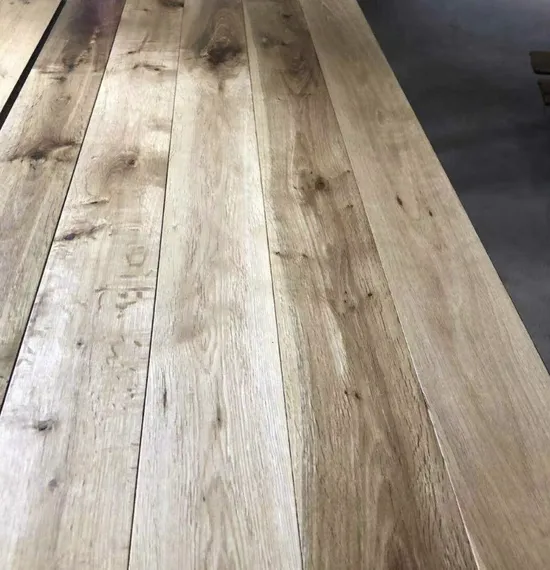
CD-grade planks allow for unlimited sound knots up to fifty millimeters in diameter, as well as filled dead knots. Mineral streaks, sapwood, and natural color variations are fully permitted across the surface of the boards. These elements are filled with tough epoxy or acrylic putty to create a flat, smooth surface ready for finishing.
The filling process must be done carefully to ensure the putty matches the natural tone of the surrounding wood fibers.
To maintain consistency, importers should establish visual targets for the following features before production:
- Sound knots and filled dead knots up to fifty millimeters in diameter
- Natural color variations and bold mineral streaks across the plank face
- Unlimited sapwood and structural grain variations that do not affect stability
Structural Integrity Versus Cosmetic Defects
Cosmetic variations must never be confused with structural defects that cut short the lifetime of the floor. Planks must remain entirely free of core separation, deep cracks that penetrate the backing veneer, and tongue-and-groove milling errors. The putty used to fill surface knots must be fully cured, sanded flush, and compatible with the final protective coating.
Proper sorting during production ensures that only structurally sound boards are packaged for shipment.
Standard Dimensions for CD Grade Engineered Flooring
Most commercial projects use wide planks measuring one hundred and ninety millimeters or two hundred and twenty millimeters in width. The overall thickness typically ranges from fourteen millimeters to fifteen millimeters, featuring a three-millimeter or four-millimeter wear layer. These dimensions provide a perfect balance of structural stability and material savings.
Using standard dimensions also simplifies installation and allows for easy matching with other building elements.
| Specification Parameter | Standard Measurement | Acceptable Tolerance Range |
|---|---|---|
| Plank Width | 190 mm to 220 mm | +/- 0.2 mm |
| Total Thickness | 14 mm to 15 mm | +/- 0.2 mm |
| Wear Layer Thickness | 3 mm to 4 mm | +/- 0.1 mm |
| Moisture Content | 6% to 9% | +/- 1.0% |
Understanding Tolerance Standards for Character Grades
Character-grade flooring naturally possesses more variation, which must be managed through strict tolerance agreements. The contract must specify the maximum percentage of sapwood, the allowable size of open cracks, and the distribution of knots per square meter. Defining these limits clearly prevents disputes over whether a batch meets the acceptable look for the target market.
Evaluating Manufacturing Standards with Your Hardwood Flooring Supplier
Technical details dictate the performance of engineered wood in high-traffic residential or commercial rooms. Importers must work with their chosen Hardwood flooring supplier to set strict tolerances for moisture content and dimensional accuracy. Quality manufacturing processes prevent the wood from warping, cupping, or gapping after installation.
Understanding these technical details is vital for ensuring long-term customer satisfaction and reducing warranty claims.
Moisture Content and Kiln Drying Precision
The moisture content of imported wood must match the equilibrium moisture level of the target market. For North American climates, the target moisture level must remain between six percent and nine percent. Careful kiln drying is the only way to get this uniform moisture spread across both the veneer and the core.
Bad drying leads to severe shape changes once the flooring is exposed to regional indoor climates.
Core Construction and Adhesive Quality
The core of the engineered plank provides the necessary resistance to humidity changes. Multi-ply birch plywood represents the top standard for core construction, offering superior stability compared to softwoods. Sourcing hardwood in China provides access to advanced factories that specialize in high-performance multi-ply cores.
The adhesives used to bond these layers must meet CARB Phase 2 or EPA TSCA Title VI standards for formaldehyde emissions.
Finishing and Wear Layer Protection
CD grade flooring often receives a wire-brushed or hand-scraped texture to boost its rustic appearance. This texture is protected with multiple coats of UV-cured urethane containing aluminum oxide for scratch resistance. High-quality finishes ensure that the floor keeps its appearance under heavy foot traffic.
The application of these finishes must happen in dust-free rooms to prevent surface flaws and bubbling.
Underlayment and Backing Veneer Quality
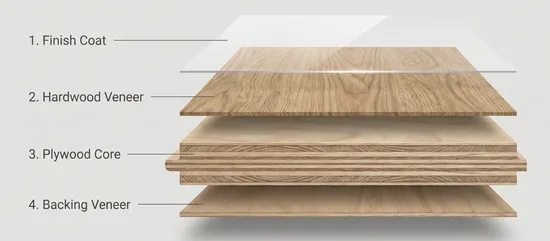
The backing veneer is the bottom layer of the engineered plank and is vital for balanced tension. It must consist of high-quality hardwood veneer, such as poplar or birch, to balance the tension exerted by the top wear layer. A balanced build prevents the planks from cupping or bowing over time.
Importers should verify that the backing veneer has been treated with anti-fungal agents to prevent mold growth in humid rooms.
Negotiating Bulk Pricing with Your Hardwood Flooring Supplier
Securing competitive pricing requires a deep understanding of manufacturing costs and raw material market values. Ideally importers should use their buying power by committing to annual volume agreements with their hardwood flooring supplier. This commitment also allows the supplier to buy raw lumber at lower prices and pass the savings down into your products. A well-negotiated pricing setup is key to keeping healthy profit margins in a competitive retail landscape.
However, in recent international trading conditions, negotiating through a number is now more challenging, as too often the commitment by importers with its claimed annual purchase quantity has shown to be just a fabricated figure and rarely happens. This causes significant stress for the factory, and gradually this type of negotiation power is barely given to individual importers. Only well-known distributors and brands are given these benefits.
Understanding Minimum Order Quantities (MOQs)
A standard minimum order quantity for custom engineered flooring is one twenty-foot container. This volume equals about one thousand five hundred square meters of product, depending on plank thickness. Ordering in full container loads cuts per-unit shipping costs and ensures smooth factory production schedules.
Factories are much more willing to customize specifications when orders meet these volume thresholds.
Breakdown of Production Costs and Surcharges
Importers must request a clear breakdown of costs, including raw lumber, core materials, adhesives, labor, and packaging. Changes in the cost of birch plywood cores or oak veneers will directly affect the final unit price. Understanding these shifts protects buyers from sudden price increases during times of market swings.
It also helps buyers find specific areas where cost-saving steps can be taken without lowering quality.
Payment Terms and Financial Risk Mitigation
Standard payment terms involve a thirty percent wire transfer deposit to start production. The remaining seventy percent balance is paid upon showing the Bill of Lading and shipping papers. Using irrevocable Letters of Credit provides an extra layer of security for high-value deals.
Building a clean credit history with the factory can eventually lead to more favorable open-account terms.
Currency Fluctuation and Hedging Strategies
International deals are highly sensitive to currency shifts, which can quickly hit overall profits. Importers should negotiate pricing in stable currencies or set up exchange rate corridors in their purchasing contracts. Using financial hedging tools through commercial banks can protect against sudden movements in foreign exchange rates.
This careful financial planning ensures predictable landed costs throughout the year.
Logistics Managed by Your Hardwood Flooring Supplier
International shipping logistics can quickly eat into profit margins if not managed with close attention to detail. Importers must coordinate closely with the logistics department of their hardwood flooring supplier to select the best shipping terms. Free-on-board terms represent the most common and controllable setup for global freight.
This setup gives the importer control over the choice of ocean carrier, transit routes, and destination port handling.
Ocean Freight and Container Optimization
Engineered flooring is exceptionally heavy, meaning containers will reach their weight limit before they are physically full. A standard twenty-foot container can hold about ten to twelve pallets of flooring, totaling around fifteen to twenty metric tons. Proper weight distribution inside the container prevents shifting and damage during ocean transit.
Importers must work with freight forwarders who specialize in heavy wood products to avoid overweight penalties at local ports.
Protecting Wood Products from Transit Moisture
The ocean voyage from Asian ports to North America or Europe exposes cargo to extreme temperature and humidity shifts. Containers must be lined with heavy-duty moisture barriers to prevent condensation from dripping onto the wooden pallets. Placing industrial-grade silica gel packs inside the packaging helps keep a stable microenvironment.
Pallets must also be wrapped tightly with stretch film to prevent moisture absorption during transit.
Demurrage and Port Handling Coordination
Importers must set up clear communication lines with their customs broker to ensure rapid clearance at the destination port. Delays in customs can result in expensive port storage fees, which build up daily after the free-time window ends. Having all paperwork ready in advance is the best defense against these extra expenses.
Negotiating extended free-time windows with the ocean carrier provides a safety net for unexpected delays.
Inland Logistics and Final Mile Delivery
The transit from the arrival port to the distribution center requires coordination with reliable transport firms. Flatbed trucks or container chassis must be scheduled in advance to match the vessel arrival times. Importers should verify that the destination warehouse has the needed tools to unload heavy, oversized pallets safely.
Good inland shipping cuts down handling steps and reduces the risk of accidental product damage.
Quality Control Protocols with a Chinese Hardwood Flooring Supplier
Keeping quality steady across large production batches requires a strict, multi-stage inspection plan. Sourcing hardwood in China offers immense cost advantages, but buyers must verify that the factory follows strict quality rules. Independent inspection firms provide unbiased checks of the product quality before the container is sealed.
This objective check is the best way to protect capital and guarantee customer satisfaction.
Pre-Production and In-Line Inspections
Quality checks begin before production starts by testing the moisture levels of the raw veneer piles. In-line inspections watch the application of glue and the temperature of the hot presses to prevent separation issues. Catching errors during these early phases prevents the waste of precious raw materials.
Regular tuning of the production machinery ensures that the tongue-and-groove profiles remain perfectly consistent.
Pre-Shipment Inspection Checklists
A final pre-shipment inspection must be run on randomly selected boxes from the completed order. Inspectors measure length, width, thickness, and tongue-and-groove fit to ensure a perfect match with the approved sample. Any batch that fails to meet the agreed tolerances must be rejected and remade.
The inspection report must contain clear photographs of the tested planks and the packaging.
Our quality control inspectors use a strict checklist to check every batch before container loading:
- Moisture content readings taken across fifty random planks to ensure a range of six to nine percent
- Milling tolerances check to guarantee a maximum gap deviation of less than zero point two millimeters
- Boiling water testing on core samples to check bond strength and rule out future separation
Defect Tolerance Thresholds for CD Grade Orders
Standard industry contracts allow for a five percent defect tolerance rate to account for minor natural variations. For CD grade orders, this tolerance must be clearly defined to prevent the inclusion of unusable boards. Boards with structural damage, open knots, or major milling flaws must be left out of this percentage.
Having a clear agreement on what counts as a defect prevents disputes when reviewing the inspection results.
Laboratory Testing for Structural Integrity
In addition to visual checks, sample planks must undergo laboratory testing to verify bond strength and environmental safety. The boiling water test is commonly used to check the resistance of the plywood core to separation. Formaldehyde emission levels must be checked using chamber testing methods specified by target market rules.
These laboratory reports must be saved to provide a clear paper trail of product safety and rule-following.
Import Regulations and Compliance with Your Hardwood Flooring Supplier
Dealing with complex international trade laws is necessary to avoid severe legal penalties and cargo seizures. Importers must check that their chosen factory partner has all necessary certificates for global sales. Following the law protects the reputation of the importing company and ensures smooth customs entry.
Staying informed about changing trade rules prevents costly disruptions to the supply chain.
The Lacey Act and Environmental Declarations
United States importers must follow the Lacey Act, which bans the import of illegally sourced wood products. Every shipment requires a formal Plant and Plant Product Declaration detailing the scientific name of the wood species and the country of harvest. Failure to provide accurate information can result in heavy fines and loss of the goods.
Keeping thorough chain-of-custody papers is the only way to meet these strict federal rules.
Formaldehyde Emission Certifications

Engineered flooring must meet strict national emission standards to protect indoor air quality. In the United States, for example, hardwood flooring products must carry proof showing that the products follow EPA TSCA Title VI and CARB Phase 2. European markets on the other side require CE marking and compliance with E1 or stricter E0. It is wise to check with your potential suppliers on whether they have valid testing certifications issued by approved independent laboratories.
Understanding Anti-Dumping and Countervailing Duties
Some manufacturing countries face anti-dumping duties designed to protect domestic makers. Importers must check current trade tariffs for engineered wood products sourced from specific global regions. For example, engineered wood flooring imported from China into the United States is subject to substantial anti-dumping and countervailing duties (ADD/CVD), which can significantly increase the total cost if not properly accounted for.
Accurate classification under the correct Harmonized Tariff Schedule code is vital for avoiding expensive customs audits.
Phytosanitary Certificates and Fumigation Requirements
Solid wood packaging materials, like pallets and crates, must undergo heat treatment or fumigation to prevent the spread of pests. Every shipment must include a valid phytosanitary certificate confirming that the packaging meets ISPM 15 international standards. Non-compliant packaging can lead to immediate cargo rejection at the port of entry, resulting in massive return-freight costs.
Making sure the supplier uses certified plastic or treated wood pallets removes this risk entirely.
Calculating Total Cost of Ownership with a Hardwood flooring supplier
The purchase price of the flooring is only one part of the total investment required to bring the product to market. Importers must calculate the Landed Cost, which includes all expenses paid from the factory floor to the final warehouse. A detailed financial model prevents unexpected cash flow shortages during the import cycle.
Accurate cost calculations are the foundation of any successful wholesale or retail pricing plan.
Ocean Freight Rates and Surcharges
Ocean freight rates change often based on seasonal demand, fuel costs, and global shipping lane congestion. Importers must get multiple freight quotes from reliable carriers to secure competitive rates. Budgeting for possible peak season surcharges prevents sudden spikes in shipping costs from ruining profit margins.
Long-term freight contracts can provide price stability during times of high market shifts.
Customs Duties, Taxes, and Brokerage Fees
Import duties are calculated as a percentage of the declared value of the goods based on the Harmonized Tariff Schedule code. Customs brokers charge flat fees for processing the entry papers and working with government agencies. Importers must also factor in local harbor maintenance fees and merchandise processing fees.
Understanding these specific taxes prevents unexpected financial bills upon cargo arrival.
Inland Freight and Warehouse Handling
Once the container clears customs, it must be moved by truck or rail to the final distribution warehouse. Inland freight costs can be high, especially for heavy wood shipments traveling long distances from the port. Warehouse handling fees, pallet costs, and unloading charges must be factored into the final unit cost.
Smart warehouse routing reduces inland transit times and lowers overall distribution costs.
Factor in Product Waste and Claims Reserves
Even with strict quality checks, a small percentage of material will be damaged during transport or installation. Importers must include a three to five percent waste factor in their financial projections to account for these losses. Setting up a claims reserve fund ensures that the business can cover the cost of replacing damaged boards without affecting daily operations.
This safe approach to financial planning protects the long-term health of the business.
Building Long-Term Success with Your Hardwood flooring supplier
A purely transactional approach to importing often leads to uneven quality and shifting pricing over time. Building a close partnership with a reliable hardwood flooring supplier ensures preferential production scheduling and stable pricing. Mutual trust and clear communication form the foundation of a successful international importing business.
Treating the supplier as an extension of your own operations builds teamwork and steady progress.
Creating a Feedback Loop for Steady Progress
Importers should share feedback from installation teams directly with the factory production managers. This real-world performance data allows the factory to refine its grading steps and improve milling precision. Steady feedback ensures that subsequent shipments meet the precise expectations of the local market.
It also shows the supplier that you are committed to a long-term partnership.
Securing Exclusive Distribution Agreements
Once a strong working partnership is built, importers can negotiate exclusive distribution rights for specific geographic areas. This exclusivity prevents local competitors from sourcing the exact same product from the same factory. Exclusive agreements encourage both sides to invest more resources into marketing and brand growth.
This protection is highly useful for building a distinct, recognizable brand in the regional marketplace.
Planning Joint Product Development
Working together on new surface textures, color trends, and core setups keeps the product line competitive. An active factory will welcome the chance to develop unique products tailored to emerging design trends. Joint efforts yield unique flooring options that command higher margins in the retail marketplace.
Sharing market insights with the supplier helps connect future production with consumer demand.
Negotiating Volume Rebates and Cooperative Marketing
High-volume importers should set clear purchasing milestones that trigger financial rebates or discounts on subsequent orders. Factories may also offer joint marketing funds to support local promotional campaigns and trade show exhibits. These financial incentives lower the overall cost of goods sold and increase the return on investment.
Joint agreements match the financial goals of both the importer and the supplier.
Summary of CD Grade Importing with a Hardwood Flooring Supplier
Importing CD grade engineered hardwood flooring represents a highly profitable opportunity for businesses that execute the process with care. Success requires a deep understanding of wood grading, careful supplier checks, and strict compliance with international trade laws. By focusing on quality control and building strong partnerships, importers can deliver beautiful, durable, and cost-effective flooring solutions.
This smart method minimizes risks and maximizes profits across the entire supply chain.
Key Takeaways for Successful Imports
Building a direct connection with a verified hardwood flooring supplier cuts out unnecessary middleman costs and ensures consistent grading. Running pre-shipment inspections guarantees that only compliant, high-quality planks are loaded into the containers. Strict compliance with environmental rules protects the business from costly customs delays and legal penalties.
These three core blocks form the basis of a secure importing pipeline.
To guarantee a successful and profitable import venture, keep these important action points in mind:
- Bypass third-party brokers to set up direct communication with primary factories
- Include specific grading parameters and moisture tolerances directly in the sales agreement
- Enlist independent third-party agencies to run pre-shipment inspections
The Real Value of CD Grade Flooring
CD grade engineered planks offer a unique blend of rustic charm and structural stability that appeals to modern consumers. This product category allows developers to get a high-end look while staying within tight budgetary limits. Following the steps outlined in this guide builds a secure, profitable, and scalable importing pipeline.
Partnering with a reliable hardwood flooring supplier ensures that your inventory remains stocked with high-quality, high-demand products.