
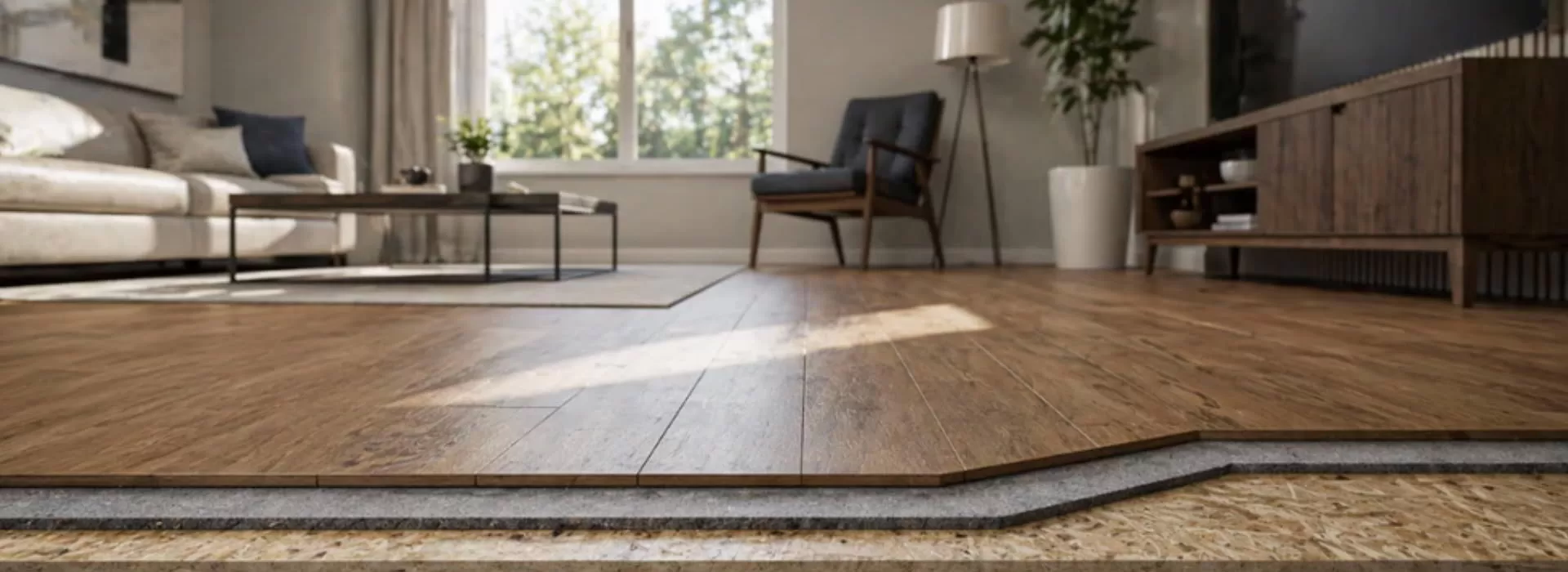
Introduction: The Foundation of Your Home’s Future
I have seen homeowners spend twenty thousand dollars on a floor that looked beautiful in the showroom only to watch it get damaged by a spilled drink or a pet within six months. Home renovation projects can feel overwhelming with all the choices involved. People often focus on paint colors and cabinet handles while treating flooring as something less important.
This is a serious mistake. Your floor is the only surface you touch every day in your home. It affects how sound travels through your rooms, how comfortable your home feels, and how much money you will get when you sell. My goal is to explain the technical details about flooring that will help you understand your budget and make better choices for your home’s future.
The “Hidden” Budget Killers: It’s Not Just the Planks
As a consultant, the first thing I tell my clients is that the price on the sample board is only about 60% of the story. I’ve seen projects grind to a halt because a homeowner didn’t realize that the “unseen” labor and prep can cost as much as the materials themselves.
To keep your project on track, you must budget for these non-material expenses:
- Subfloor Preparation: This is non-negotiable. If your subfloor isn’t flat, your new floor will click, creak, or even crack. Expect to pay 1.50–3 per sq ft for leveling compounds and skimming.
- Baseboards and Quarter Round: Removing and replacing these is labor-intensive. Budget 2–8 per linear foot for materials and installation.
- Transition Strips: Essential for where your new wood meets your old tile. These run 10–30 each.
- Door Adjustments: If you are moving from thin carpet to thick hardwood, your doors won’t swing. You’ll need a carpenter to trim them.
- Furniture Moving & Disposal: Don’t forget the 0.50–1 per sq ft fee many contractors charge just to haul away your old, dusty carpet.
Investing in the “Pinnacle” of Beauty
If you want to buy a floor once and never think about it again, solid hardwood is the only answer. Milled from a single piece of wood (typically 3/4 inch thick), it can be sanded and refinished for generations. With proper care, it is truly a 100-year investment.
However, if you are dealing with a concrete slab or humidity swings, engineered hardwood is your best friend. But here is the insider secret: the quality of engineered wood is all about the “wear layer.” Look for a real wood veneer that is 2–6 mm thick. A 2 mm veneer can maybe be sanded once; a 6 mm veneer gives you the longevity of solid wood with the “dimensional stability” of a plywood core that won’t warp.
As the guide perfectly states:
“Hardwood flooring represents the pinnacle of natural beauty and timeless elegance in residential flooring.”
2025 Trends: The Death of Cool Grey
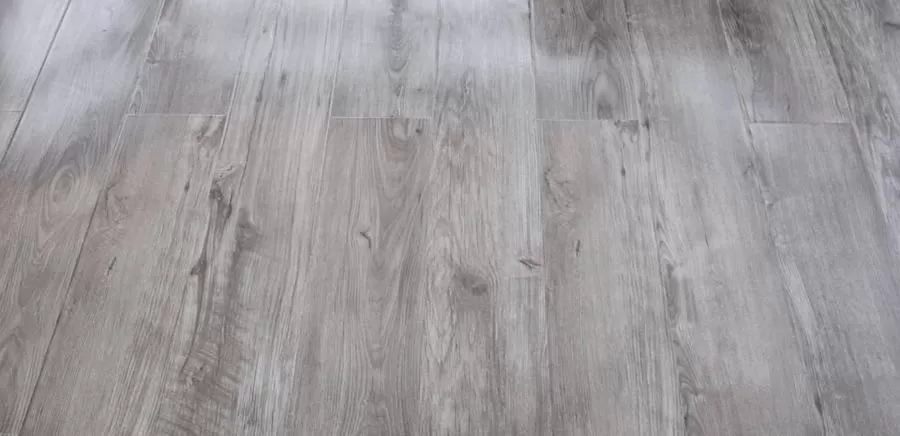
If you are still looking at cool gray planks, put them down. The “sterile” look is dead. For 2025, we are seeing a massive shift toward “organic” warmth. The move is toward honey oak, walnut, and natural maple.
The “upscale” look now relies on scale: we are seeing wider planks (5–7+ inches) paired with longer lengths (up to 84 inches). These longer boards are a major luxury indicator because they minimize distracting seams. Finally, we are opting for matte and low-sheen finishes. Why? Because high-gloss shows every scratch and dust mote, while matte finishes showcase the natural grain and hide the reality of daily life.
The Eco-Conscious Surprise: Cork and Linoleum
Homeowners are often shocked to learn that some of the most durable floors are also the most sustainable.
- Cork: This is harvested from the bark of the cork oak tree—the tree stays alive and keeps growing. It’s naturally sound-absorbing and warm underfoot.
- Linoleum (Marmoleum): Don’t confuse this with cheap vinyl. Authentic Marmoleum is a bio-based product made from linseed oil and wood flour.
The Benefits:
- Naturally Antimicrobial: It actually resists the growth of bacteria and mold.
- Resilient: It has a “bounce” that is much easier on your joints than tile or stone.
The “No Vinegar” Rule: Protecting Your Luxury Stone
Natural stone designs in marble, travertine, and slate offer a significant ROI for luxury homes. It’s a “wow” factor that increases home value like no other material. But it comes with a warning: Never use vinegar or acidic cleaners.
Acid causes “etching,” a permanent chemical burn that dulls the surface of the stone. To protect your investment, you must use a pH-neutral stone cleaner for both the stone and the grout. Additionally, plan to professionally reseal your stone every 1–3 years. It’s high-maintenance, yes, but for a primary bath or feature entry, the elegance is unmatched.
LVP vs. Laminate: The Ultimate Practical Showdown
For a high-traffic, kid-and-pet-friendly home, the choice usually boils down to these two. Here is the technical breakdown:
| Features | Luxury Vinyl Plank (LVP) | Laminate Flooring |
|---|---|---|
| Water Resistance | 100% Waterproof (Best for Kitchen/Bath) | Water-resistant (Sensitive to standing water) |
| Durability | High scratch resistance | Superior scratch resistance |
| DIY-Friendliness | Very High (Click-lock) | High (Floating system) |
| Tactile Feel | Softer/Warmer | Can feel “hollow” or “hard” without a pad |
Insider Tip: When buying LVP, look at the core. WPC (Wood Plastic Composite) offers more underfoot comfort, while SPC (Stone Plastic Composite) offers much higher dent resistance and rigidity. If you have heavy furniture or high-heeled traffic, choose SPC for improved durability.
The Bottom Line: LVP is the king for wet areas, but for a dry basement or living room, modern Laminate offers a more realistic wood feel and better scratch resistance at a slightly friendlier price.
Conclusion: Beyond the Surface
Your floor is more than just a backdrop; it is the engine room of your home’s design. Whether you choose the 100-year legacy of solid hardwood or the waterproof resilience of a high-end SPC vinyl, remember that the “cheapest” option often becomes the most expensive one when you have to replace it in five years.
As you look at your samples this weekend, ask yourself the most important question in renovation: Are you choosing a floor for the next five years or for the next fifty?