
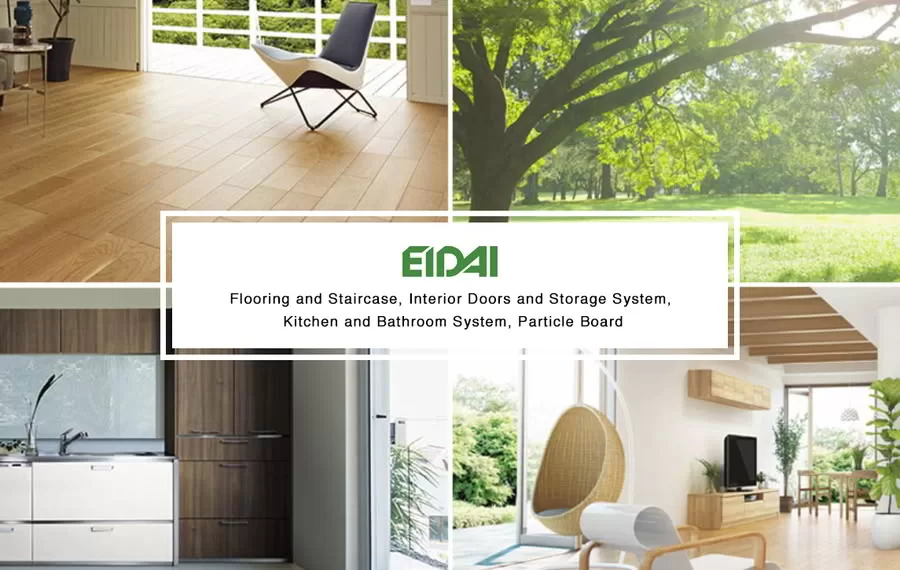
This note introduces the Japanese impact reduction “walfare flooring” (福祉基地板) from Eidai Co (永大産業), explaining why it is considered the world’s best solution for elderly safety. It highlights the product’s layered construction, key performance traits (fall protection, slip resistance, noise control, durability, aesthetics, and stability), and compares it with typical domestic alternatives.
The summary also offers guidance on choosing the right floor when seniors are—or are not—in the household.
Why Impact Reduction Flooring Matters
- Hip‑fracture prevention: A fall on hard surfaces often leads to the first and final fracture for seniors; avoiding such injuries preserves both health and financial resources.
- Psychological benefit: Investing in a safe floor is a concrete expression of filial care, rather than mere words.
Mechanical Design in Impact Reduction Hardwood Flooring

| Layer | Material / Feature | Function |
|---|---|---|
| Gray rubber pad | Soft, pliable rubber | Primary shock absorber (first “damper”) |
| Slit‑groove layer | Dense, staggered slits (vertical & horizontal) | Energy dispersion; depth varies to create a 1 + 1 > 2 effect, reducing impact hardness below 100 G |
| HDF reinforcement | Ultra‑thin high‑density fiberboard (custom Japanese petro‑chemical process) | Provides a hard, low‑elastic‑modulus surface that stays flat under load; resists rebound and warping |
| Multi‑layer core | 10‑ply (high‑standard plywood) | Structural stability, load distribution, and moisture resistance |
| Surface coating | Hard, water‑repellent film with high DPI printing | Enhances wear resistance, visual fidelity, and ease of cleaning |
Core Performance Traits
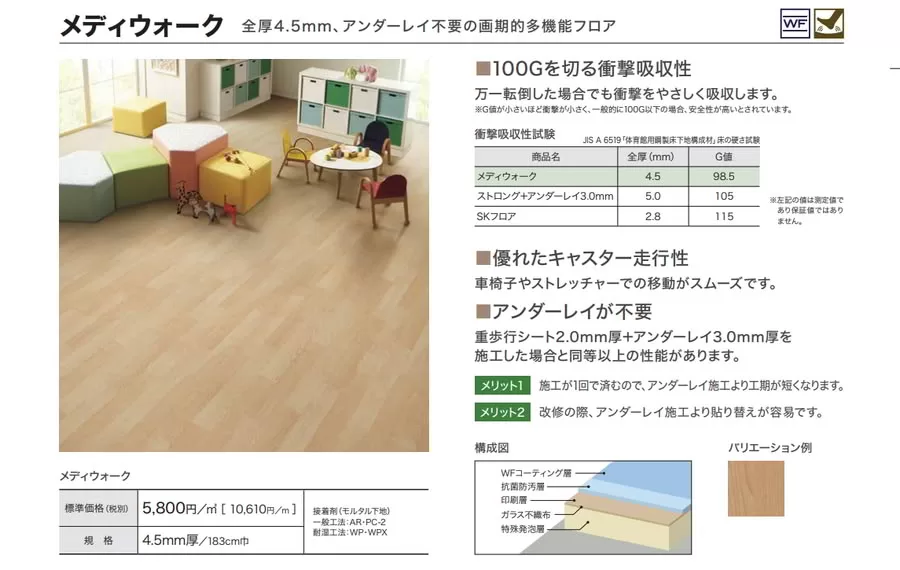
- Fall Protection – The multi‑stage damping system cuts fracture risk to under 10 % according to Japanese medical data.
- Slip Resistance – Surface texture offers a subtle grip (non‑sticky) that feels safe even in socks; domestic anti‑slip boards are often overly tacky, potentially turning into tripping hazards.
- Noise Reduction – Achieves AL‑45 rating; a dropped phone or a child’s footstep is muted to near‑whisper levels.
- Durability – HDF layer resists disinfectants (alcohol, bleach) and heavy traffic; unlike many domestic boards that crack when exposed to cleaning agents or floor heating.
- Aesthetics – High‑DPI printing with low repeat patterns and a “light‑shadow sync” (光影同步) surface creates realistic wood grain depth, matching upscale Japanese interior palettes.
- Stability – The HDF’s low rebound property prevents “spring‑back” on heated floors; the board remains flat even under radiant heating.
Comparison with Domestic Alternatives
| Attribute | Eidai (Welfare Flooring) | Typical Domestic Brands’ Hardwood Flooring |
|---|---|---|
| Impact Hardness (G) | < 100 | 180–200 |
| Slip Texture | Balanced – non‑sticky, safe | Overly tacky → tripping risk |
| Noise Rating (AL) | AL‑45 (whisper) | Higher, audible footfalls |
| Disinfectant Resistance | Excellent (alcohol, bleach) | Poor – surface degradation |
| HDF Density | Ultra‑high, low elastic rebound | Lower density → warping, rebound |
| Compatibility with Underfloor Heating | Fully compatible | Often limited, may warp |
| Visual Detail (DPI) | Very high, low repeat | Moderate, visible repeats |
Practical Guidance for Consumers

- Budget Consideration: Adding a modest premium for this floor yields long‑term health savings for elderly residents.
- Color Selection: The line offers three deep tones—gray‑bee, wood‑oak, and dark brown—chosen because darker hues convey senior‑friendly “high‑end” aesthetics in Japanese décor.
- Household Without Seniors: Even if fall protection isn’t needed, the floor still provides superior foot comfort, sound insulation, and visual appeal, making it a worthwhile upgrade.
- Installation Tips: Pair with a double‑layer subfloor (二重床) to maximise impact reduction; ensure proper sealing to maintain moisture resistance.
Bottom Line
Eidai’s Japanese impact reduction flooring blends rigorous engineering (multiple damping layers, high‑density HDF, and a sophisticated core) with user‑centric benefits (safety, quietness, durability, and beauty). For families caring for aging parents, it represents a tangible, cost‑effective way to extend health and reduce fall‑related expenses. Even in homes without elders, its premium performance justifies the investment.