
Recently with the increasing popularity and tremendous discussions on AI and AI agent to support the flooring industry, our team has also tried to explore the different use of AI. It is much fascinating with how much AI / AI agents can do to help us in everyday jobs, from the basics of information researching, to graphic generation, and even automated tasking that help to execute jobs and activities.
Here this page will brief explain the different concept and stage of AI. Along size, we demonstrate some of the features that AI is capable of doing with relevant tasks associating with flooring industry.
What is an AI Agent?
- Intuition – An Agent is simply an AI system that can take on tasks that a human employee would do.
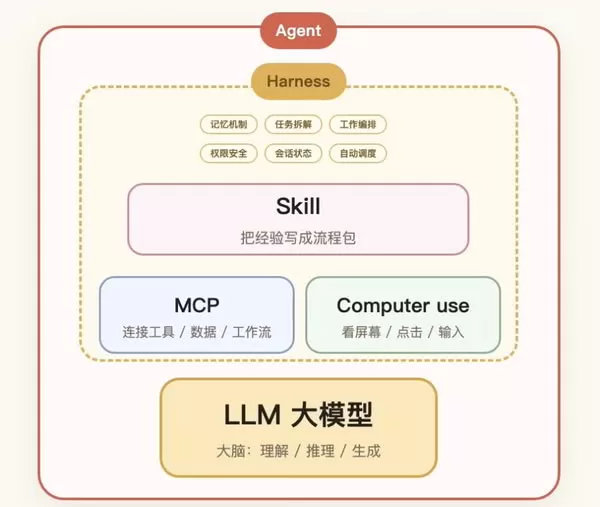
- Formal view – It combines a large language model (the “brain”) with a harness that connects the model to tools and data.
- Key insight – Without a harness, the model stays a text generator; the harness turns it into a working assistant that can fetch files, send messages, or create presentations.
Core Capabilities of Modern AI Agents
| Capability | Human analogue / Where to Get it | What the AI needs |
|---|---|---|
| Knowledge base | A University Degree | Large‑scale pretrained model (LLM) |
| Tools in use | Computer & software proficiency | MCP + Computer Use protocols |
| Experience | Prior job experience | Skill scripts built from business logic |
- Knowledge → model’s “intelligence level” (from elementary to doctoral).
- Tool competence → ability to invoke external programs (handled by MCP & Computer Use).
- Experience → reusable Skill pipelines that encode domain‑specific procedures.
MCP: The Communication Bridge
- What it does – MCP (short for Message Communication Protocol) is a lightweight protocol that lets a language model issue commands to external software without writing bespoke code for each tool.
- Components – a request packet (action + parameters) ↔ MCP server ↔ target application.
- Practical tip – MCP solves the “integration explosion” problem; instead of wiring a model to every app separately, you route all requests through a single, standardised channel.
Computer Use: Giving AI Computer Access
- Intuition – Computer Use lets the AI Agent to control the mouse, keyboard, and screen exactly as a human would, enabling tasks like file organizing or screen‑recording.
- Why it matters – Some operations (e.g., dragging a file into a folder) cannot be expressed as API calls; they require simulated UI interactions.
- Common mistake – Assuming MCP alone can manipulate the desktop; without Computer Use the Agent cannot reach UI‑only functionalities.
Skill Layer: Business Logic as a Lever
- Definition – A Skill is a scripted SOP that tells the Agent what to do (business logic) and how to chain tool actions.
- Structure – Input → parsing → tool sequence (via MCP/Computer Use) → output (e.g., video + subtitles).
- Key advantage – Skills embed your domain expertise, so the Agent’s performance depends on how well the Skill captures the real workflow, not on raw model size.
Harness: Safety, Memory, and Governance
- Purpose – The Harness wraps the model with safeguards: memory mechanisms, token‑budget controls, and multi‑layer security checks.
- Formula – Agent=Harness+Model
Intuitive meaning: an Agent equals the raw LLM plus the surrounding infrastructure that makes it trustworthy and usable.
- Insight – Most AI Agent “failures” (forgetting yesterday’s instructions, leaking data, overspending tokens) stem from a missing or weak harness, not necessary from the model’s intelligence.
| Terms | Explanation | Examples | Supporting |
|---|---|---|---|
| Agent | Agent executing tasks that simulate a worker | Hermes, OpenClaw, Cloude Code, Codex, Cursor, Devin | LLM Model, MCP & Computer Use |
| Skill | Knowledge in executing a task, workflow methodology, use of computer, and work experience | SOP by human interaction using natural language. |
Putting It All Together: How Non‑technical Users Can Leverage Agents
- Identify a business need (e.g., automated video production).
- Create a Skill that encodes the end‑to‑end process in plain language.
- Deploy the Agent with a ready‑made harness (many platforms provide default security and memory settings).
- Connect tools via MCP; add Computer Use if UI interaction is required.
- Iterate – refine the Skill if the output deviates from expectations; adjust the harness for better safety or cost control.
By focusing on Skill (your domain knowledge) and trusting the Harness to handle integration, a non‑technical founder can let an AI Agent function like a competent junior employee—accelerating work without needing to master every underlying technology.
Product Generating: Small Format Herringbone SPC Flooring
Using AI, we have generated some product under the term “Small Format Herringbone SPC Flooring. The AI took effort to research informations that appears to be from Google Index Search Results. Using the collected information from the internet, the AI has generated a product based on specification, consumer trends (paint points), and design.
The Results was some what interesting;
Market Strategy & Design Directions
- Feasibility: Highly feasible. There is a “size gap” in the market where consumers want the intricate look of traditional small-scale wood herringbone but in a waterproof, affordable SPC format.
- Consumer Pain Points: Users struggle with standard large-scale herringbone being “cut off” in small rooms, making spaces look cramped. The “Mini-Size” format fits more “V” shapes per square foot, providing proportional harmony.
- Design Strategies:
- Urban Minimalism: Light honey oak tones to maximize light reflection in small studios.
- Heritage Premium: Hand-scraped dark walnut for a high-end, timeless aesthetic that mimics expensive solid wood.
- Nordic Innovation: Light ash with micro-bevels to emphasize the intricate pattern grid.
This demonstration has provide some interesting product design strategies and 3 specific design directions was provided.


Product Proposals
| Collection Naming | Positioning | User Value | Business Value |
|---|---|---|---|
| Urban Studio Core – Natural Honey Oak | An entry-level, high-volume SKU targeting first-time homeowners and apartment renovators in urban areas. | The light honey oak tones combined with the extra small 90mm width create a bright, airy feel that makes narrow hallways and studios appear significantly wider. | Uses standard 0.3mm wear layers and a simplified click system, making it a competitive “volume driver” for big-box retailers or e-commerce platforms. |
| Heritage Estate – Hand-Scraped Walnut | A premium product positioned for luxury hospitality and high-end residential projects seeking a “bespoke wood” appearance. | Features a hand-scraped texture that provides tactile richness, solving the “plastic look” pain point often associated with standard SPC. | Higher margin potential as a “Hero” product; requires advanced EIR (Embossed In Register) technology which acts as a barrier to low-cost competitors. |
| Nordic Grid – Ash Grey Micro-Bevel | An innovative, design-forward option for boutique offices and modern minimalist interiors. | The Scandinavian light ash grain and micro-bevel edges create a delicate shadow line, emphasizing the intricate “extra small” pattern as a focal point. | Targets the “Design/Architecture” segment where uniqueness is prioritized over price; low risk of inventory stagnation due to the high popularity of grey/light tones. |
Key Specifications
| Field | Urban Studio Core | Heritage Estate | Nordic Grid |
|---|---|---|---|
| Materials | Stone Polymer Composite (SPC) + IXPE underlayment | High-density SPC core + 20mil (0.5mm) wear layer | Recycled SPC core + Nano-ceramic coating |
| Dimensions | 90mm x 450mm (Plank) | 90mm x 450mm (Plank) | 90mm x 450mm (Plank) |
| Core Features | 100% Waterproof, Formaldehyde-free, Anti-slip (R10) | Superior scratch resistance, Heavy commercial rating | Stain-resistant (Coffee/Wine), High dimensional stability |
| Click System | Uniclic Angle-Angle Click | Välinge 5G-i Drop Lock (for faster precision install) | Valinge 2G Click |
| Craft/Details | Matte finish, Embossed In Register (EIR) texture | Hand-scraped texture, Deep matte anti-glare coating | Micro-bevel 4V edge, Grey wash wood grain |
| Target Cost | BOM $6.50 – $8.50 / Retail $18 – $25 per sqm | BOM $9.00 – $11.50 / Retail $35 – $45 per sqm | BOM $7.50 – $9.50 / Retail $28 – $32 per sqm |
| MOQ/Lead Time | 500 sqm / 20-25 days | 800 sqm / 30 days | 500 sqm / 25 days |
Product Positioning
| Attributes | Urban Studio Core | Heritage Estate | Nordic Grid |
|---|---|---|---|
| Positioning | Entry-level / Volume | Luxury / Premium | Designer / Innovative |
| Key Differentiator | Affordability & Light | Tactile Hand-scraped | Micro-bevel Precision |
| Material/Craft | EIR Matte | Premium EIR + Hand-scrape | Nano-ceramic + Bevel |
| Cost Range (Retail) | $18 – $25/sqm | $35 – $45/sqm | $28 – $32/sqm |
| Time to Market | 3-4 weeks | 5-6 weeks | 4-5 weeks |
| Advantages | Broad appeal, low cost | High margin, “Wood” feel | Unique look, trend-aligned |
| Risks | Low price competition | Complex production | Niche market segment |
| Strategic Role | Cash-cow / Entry SKU | Brand Hero / High-margin | Test / Differentiation |
Summary
Its fascinating on how much AI can do now days. Not only it is able to provide insightful knowledge in blink of seconds, it is capable of providing a relatively comprehensive product roadmapping. Obviously the current product roadmap provided above is slightly too simple, but it would be due to the lack of more structured prompt.
Another takeaways is that with website index search results, AI’s capability is still limited to information that is given in the lead search rank sites. Relying on top ranked website will cause information bias which is clearly demonstrated in the product roadmapping that AI has generated for us this time. As an experienced market researcher in the flooring industry, this lack of more updated and needs to be accurate information will not make AI generated strategies be usable, but can still provide effective directions on new product strategies. A more precise prompt would also be useful to generate information or data that can help product team to make new insight and even decisions.