
Resilient vinyl flooring must keep its look despite daily wear, and micro‑scratches are the most common threat. Patcraft’s Repetitive Traffic Scratching (RTS) test adapts the Martindale Scratch Test (BS EN 16094) to simulate real‑world foot traffic and evaluate appearance retention. The following notes break down the method, grading scale, test steps, and key results.
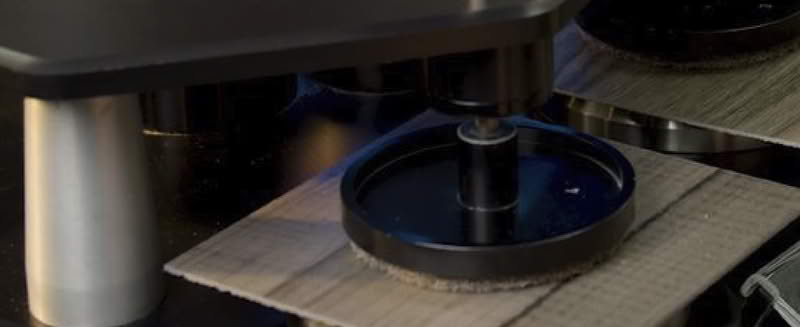
RTS Test Overview
- Purpose – Quantify how well a floor’s top coat (e.g., ExoGuard⁺) resists micro‑scratches that arise from chairs, shoes, and general traffic.
- Origin – Built on the Martindale Scratch Test procedure, which uses calibrated weights, abrasive pads, and repeatable cycles for consistent results.
- Outcome – Products are rated 1 (no change) to 5 (heavy scratches), directly informing specification decisions for high‑traffic interiors.
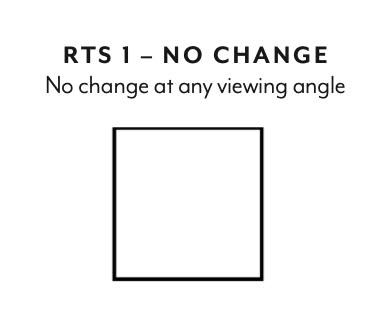
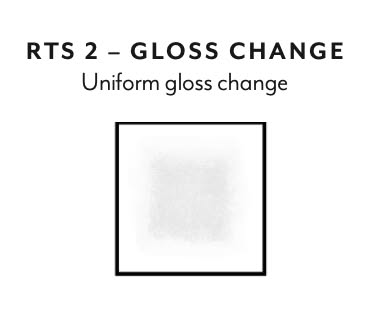
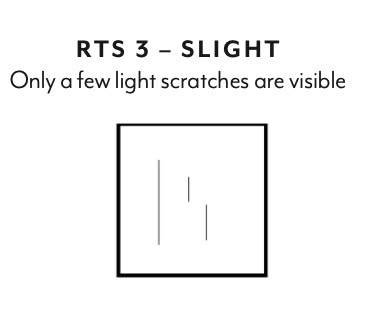
Rating Scale & Visual Impact
| RTS Rating | Visual Description | Typical Observation |
|---|---|---|
| RTS 1 – No Change | No visible alteration from any angle | Blank white square |
| RTS 2 – Gloss Change | Uniform reduction in gloss | Light‑grey rectangular area |
| RTS 3 – Slight | Few faint, thin scratches | Sparse faint lines |
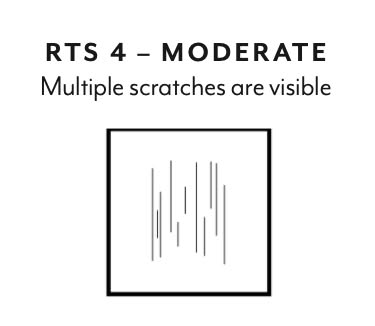
| RTS 4 – Moderate | Multiple distinct scratches | Numerous thin lines |
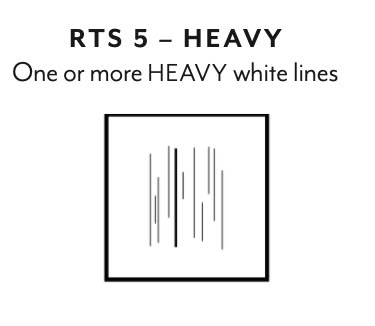
| RTS 5 – Heavy Scratches | One or more prominent white lines | Thick, dark vertical lines |
Test Procedure (Step‑by‑Step)
- Sample Placement – Position the flooring panel on the Martindale tester; a heavy‑duty grey Scotch‑Brite pad rests on top with a calibrated weight.
- Abrasive Action – Run the pad perpendicular to the grain for 50 linear cycles.
- Cleaning – Remove the panel, wipe first with a dry cloth, then with a damp cloth; allow full drying.
- Evaluation – View the dried sample from a few feet away at various angles; assign an RTS rating of 1–5 based on visible changes.
Why RTS Rating Matters for Vinyl Floorings
- Appearance Retention – Guarantees long‑term aesthetic integrity for residential and commercial spaces.
- Comparative Benchmark – Provides a clear, repeatable metric to differentiate products in procurement specifications.
- Customer Confidence – Demonstrates that the flooring has been validated against a standardized, industry‑recognised test.
Conclusion
When comparing luxury vinyl tiles with laminate flooring, the two flooring categories have a similar price range. The major benefit of vinyl flooring is obvious for its waterproof performance. However, with improving laminate flooring materials, new laminate flooring with high water resistance is now dominating the market. With improving water resistance performance in laminate floorings, it is considered a more practical flooring option due to its superior scratch resistance with its AluO3 surface. A product attribute that has always been a downfall for vinyl flooring products.
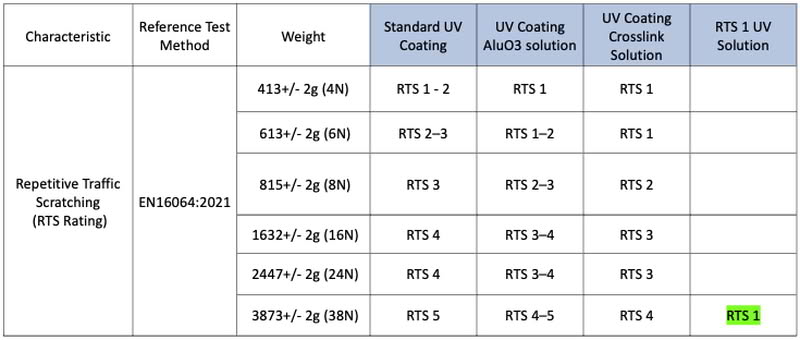
Now with the Repetitive Traffic Scratching RTS 1 Coating technology, luxury vinyl tiles are able to simulate similar performance in scratch resistance. Therefore this could be a turning point for vinyl flooring products, whether its LVT, SPC, or WPC, with the advanced scratch resistance upgrade.
Sreelance RTS 1 Rating Vinyl Flooring Products
Working with leading decorative surface technology company, Sreelance Material Technology has launched our own RTS 1 rating vinyl flooring products. Our RTS 1 rating flooring are tested using 38N calibrated weights, a quality that exceeds current industry standards.
To upgrade your vinyl flooring collections with Repetitive Traffic Scratching RTS 1 Rating performance, please feel free to submit your inquiries below: