
Envision a space, crafted with intention, where sophistication whispers from every corner. Beneath your feet, the flooring flows – a sleek expanse that seems to shrug off the constant dance of life. The secret? A Class 34 LVT Flooring!
What is Class 34 LVT Flooring? This is a question that is often not answered in the flooring industry. While many leading brand has classified their LVT grading according to ISO 10874 / EN 685, there is no detailed information on the product specifications on these flooring products. Even with global leading brands, their promotional materials has not clearly defined the quality performance in class 34 flooring. Rather, a simple “For Commercial Areas with intense use” was provided which leave much questions to be explored.
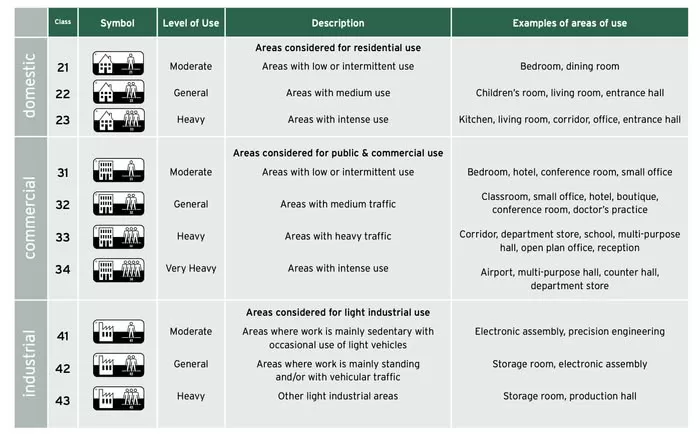
As a consumer this make it highly confusing and one has to wonder how each of these class of grades measure up in the grand arena of flooring choices? This article will explain into the classifications of luxury vinyl floorings in detail. By providing the full definition for class 34 vinyl flooring is, consumers with a clear picture on what a class 34 LVT’s product specification should be, will be able to compare class 34 LVT floorings against other flooring options likes of laminate, hardwood, and tile floorings.
The Durability of Class 34 LVT: Understanding the Rating
Let’s crack the code of “Class 34.” This isn’t some arbitrary label. It’s a badge, earned under the watchful eye of European standard ISO 10874 / EN 685. Flooring is judged, categorised by resilience and fitness for different levels of foot traffic and applications. For class 34 LVT flooring, it is defined with a durable and practical performance that outperform ordinary luxury vinyl tile products. Classified for applications in vibrant offices, bustling stores, arenas of constant motion, covering a range of commercial grade applications.
ISO 10874 / EN 685 Classification on Vinyl Floorings
The ISO 10874 / EN 685 has provided a clear guideline on the quality and performance for different class of luxury vinyl floorings. From the 20s classes which is used for residential grades, the 30s classes for commercial grades, and 40s classes that ultimately is for industrial grades. Ultimately, different classes has a different performance that reflect on different technical criteria.
| ISO 10874 / EN 685 | Test Method | Class 21/22 | Class 23 | Class 31 | Class 32 | Class 33 | Class 34 |
|---|---|---|---|---|---|---|---|
| Wear Resistance (Cycle) | EN 15468:2016, Annex A Method B | ≥ 500 | ≥ 1000 | ≥ 1500 | ≥ 3000 | ≥ 5000 | ≥ 7000 |
| Impact resistance [mm] | EN 13329:2006+A1:2008 | ≥ 400 | ≥ 600 | ≥ 800 | ≥ 1200 | ≥ 1600 | ≥ 1800 |
| Micro-scratch Resistance [class] | EN 16094 Procedure A | I ≤ 2.5 unit change at 60° | I ≤ 2.5 unit change at 60° | I ≤1.5 unit change at 60° | ≤ MSR-A3 1 ≤ 1.5 unit change at 60° | ≤ MSR-A2 1 ≤ 1.5 unit change at 60° | ≤ MSR-A2 I ≤ 1.0 unit change at 60° |
| Castor Chair Resistance | EN ISO 4918 | n/a | 5000 cycles | 10000 cycles | 25000 cycles | 25000 cycles | 25000 cycles |
| Residual Indentation | EN ISO 24343-1 | ≤ 0.3mm ≤ 0.1mm | ≤ 0.3mm ≤ 0.1mm | ≤ 0.3mm ≤ 0.1mm | ≤ 0.2mm ≤ 0.1mm | ≤ 0.2mm ≤ 0.1mm | ≤ 0.15mm ≤ 0.1mm |
| Swelling % | ISO 24336 | ≤ 20% | ≤ 20% | ≤ 20% | ≤ 18% | ≤ 18% | ≤ 12% |
| Locking Strength (kN/m) | ISO 24334 | n/a | n/a | n/a | Long: ≥ 1.0 Short: ≥ 1.5 | Long: ≥ 1.0 Short: ≥ 1.5 | Long: ≥ 1.0 Short: ≥ 3.5 |
The above table shows some of the most important quality requirements for the ISO 10874 / EN 685 classifications. These changing quality requirements defines which classification a LVT flooring it belong to.
Key Specifications for Class 34 Vinyl Flooring
Two of the most important specifications that effects the performance of vinyl floorings are wear layer thickness and base layer / core layer thickness. These two specification defines how the over all LVT tiles will performance according to ISO 10874 / EN 685 classification of standards. From our internal product testing results, to meet the criteria set for class 34 vinyl flooring, the wear layer and base layer needs to be 0.55mm and 4.5mm (ideally 5.0mm) respectively.
Class 34 LVT vs. Laminate Comparison
Laminate flooring, the old faithful product since 1984, has long been the darling of budget-friendly floor covering product. With rapid lock installation, laminate flooring is seen as the main rival to vinyl floorings. Both LVT and Laminate Flooring provide affordable pricing as some of the most inexpensive flooring options. However, can laminate truly go toe-to-toe with Class 34 LVT? Here is a quick comparison.
Durability between LVT & Laminate Flooring
Laminate’s come a long way even with recent upgrade in water resistance HDF cores. Still, Class 34 LVT generally owns the durability crown in high-traffic zones. This is due to the natural quality of wood base core that is prone to moisture absorption which lead to cupping and chips, especially when it is made with cheaper core materials. Class 34 LVT comes with a base layer that has a minimum of 4.5mm core thickness. The LVT core is 100% waterproof which means it will not have the same expansion and contraction issues that laminate flooring has. Making it more durable over longer period of product life time.
Water Resistance between LVT & Laminate Flooring
The natural quality of LVT material make it waterproof. Laminate flooring on the other hand will always have issues when it comes to moisure. Even following the latest laminate flooring product launch by leading brands, the so called “waterproof” performance only are effective within 90-120 hours with 10% moisture swelling rates.
Appearance between LVT & Laminate Flooring
Both LVT and laminate flooring has leveraged the use if high definition pricing within its decor layer. With the printing technology that are capably of mimic any type of materials from wood to stone, cements to carpets and much more. There is no real winner here as both type of flooring express similar functionalities. Though, with laminate flooring the colors are generally less vibrant due to use of different ink.
Comfort and Sound between LVT & Laminate Flooring
LVT whispers comfort underfoot, a softer, warmer embrace. It also swallows sound, a blessing in busy hives. Laminate as a wood based material can express echoey sound that is similar to hardwood flooring. If you want a quieter flooring, LVT tiles will be the ideal flooring to go for.
Cost Difference between LVT & Laminate Flooring
Both LVT flooring and laminate floorings comes with similar price range when it comes to rapid locking flooring styles. Though, with glue down LVT, price can be slightly cheaper. However, for Class 34 LVT tiles, there is a minimal 4.5mm base core specification requirements to meet the class 34 classification. Hence, the class 34 LVT and laminate flooring are equivalent to each other when it comes to costs.
Class 34 LVT vs. Hardwood Comparison
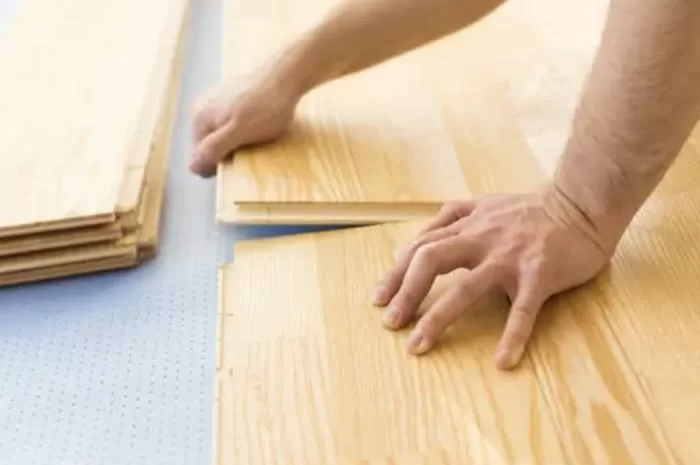
Hardwood floors has an element of timeless elegance. A touch of superior class that can elevate a property’s worth. However, hardwoods, as a natural material, also have disadvantages that is none comparable with LVT.
Durability between Class 34 LVT & Hardwood Flooring
Different natural woods has different hardness. However, to the most common species, oak, the hardness is between 1,290 lbf and 1,360 lbf. This made it vulnerable to dents, scratches, and chips. Luxury vinyl flooring on the other hand are highly durable against scratches, dents, and chips. The fact is, hardwood flooring needs to be maintained and refurbished to maintain its ultimate best appearance.
Water Resistance between LVT & Hardwood Flooring
Similar to laminate flooring, Hardwood flooring, no matter what type of wood they are, are vulnerable to moisture damage. Any chemical spills can lead to catastrophic damage, from staining, molding, and warping. LVT on the other hand does not have these issue at all. It can even be steam moped without causing product failure.
Appearance between LVT & Hardwood Flooring
For appearance hardwood flooring will always win. As there will not be a identical appearance on any two single hardwood planks. This is also the most exotic element in hardwood as it offers true uniqueness in floorings.
Comfort and Sound between LVT & Hardwood Flooring
There is no doubt that hardwood is pleasing underfoot, a solid, comfortable feel. The warm touch of hardwood surface make it incomparable. With LVT tiles, having a flexible surface make it absorb sound well, especially when paired with underlayment.
Cost between LVT & Hardwood Flooring
Cost: Hardwood flooring? A significant investment, dwarfing Class 34 LVT when you tally up the initial price and the installation fees. Add ongoing maintenance, and the long-term expense balloons. This cost gulf is a major pivot in the LVT vs. hardwood debate.
Commercial Flooring Budgets – The Bottom Line
Dollars and cents are always an important consideration when budget are very limited. While the more expensive hard surface floorings provide an extensive benefits for the most luxurious prestige, other factors are also important even for commercial projects. Easy and rapid installation, easy to upkeep and replace are all the other factors that playing a major role. Class 34 LVT often strikes a superior budget friendly balance, delivering minimal investment that hold long-term durability. Some laminate options may also undercut the prices but does not offer the same waterproof performance that made class 34 LVT floorings as easy to maintain. Though, laminate floorings are still highly likely by the flooring markets.
Key factors effecting commercial flooring budgets
- Material Costs: What you pay per square foot for the flooring itself.
- Installation Costs: The cost of labor and supplies to put it in place.
- Maintenance Costs: Cleaning, repairs, the ongoing TLC.
- Replacement Costs: The sting of replacing worn or damaged flooring.
A smart cost assessment weighs all these elements, steering you toward the flooring solution that best serves your unique requirements.
Making the Right Choice – Considering Your Needs
Flooring decisions matter. They shape the look, feel, and function of a space. Class 34 LVT presents a compelling case: durability, water resistance, a believable appearance, and fuss-free maintenance. It’s a star player for businesses where toughness and performance are paramount. Still, pit LVT against its rivals – laminate, hardwood, tile – to pinpoint the *perfect* fit for *your* specific needs, budget, foot traffic, moisture concerns, and style aspirations. Weigh the long-term costs and benefits before you commit.
Conclusion: Class 34 LVT – A Versatile and Durable Solution
Class 34 LVT? A true all-rounder, a resilient flooring champion that holds its own against laminate, hardwood, and tile. Its knack for weathering heavy use, repelling water, and mimicking pricier materials makes it a popular pick for businesses and homes alike. While other flooring types might shine in specific scenarios, Class 34 LVT offers a potent blend of performance, beauty, and value. A well-considered Class 34 LVT comparison, taking all factors into account, will light the path toward a decision that aligns with your unique needs and budget.