
The Roomvo 2026 Global Flooring Trends Report provides a comprehensive analysis of global consumer preferences based on 240 million digital interactions. Utilizing data from 2024 and 2025, the source highlights a growing demand for high-fidelity visualization tools that allow shoppers to preview products in their own living spaces.
Regional findings indicate that while the Americas favor luxury vinyl, European markets show a strengthening preference for tile and stone.
The report also identifies beige and brown as the dominant color palettes, with a notable shift toward lighter neutrals in specific coastal markets.
By examining seasonal shopping peaks and popular room types, the document offers flooring businesses a strategic roadmap to navigate shifting market conditions. Ultimately, the source serves as a data-driven guide for retailers and manufacturers to optimize their product assortments and marketing efforts.
Executive Summary
The 2026 Global Flooring Trends Report by Roomvo provides a comprehensive analysis of the global flooring market based on 240 million consumer interactions recorded between January 2024 and December 2025. As the market experiences a period of uncertainty, the data reveals that while global demand remains steady, momentum is unevenly distributed across regions.
Critical Takeaways:
- Regional Divergence: While global visualizations grew modestly, the Americas saw a 1.5% decline, contrasted by strong growth in Europe (+11.2%) and Asia (+4.5%).
- Material Dominance: Luxury vinyl and tile remain the primary choices, accounting for 61% of all visualizations globally in 2025.
- The “Visualization First” Mandate: 87% of shoppers now prefer to visualize products in their own spaces by uploading photos, signaling a high-intent shift toward personalized digital shopping.
- Neutral Palette Stability: Warm neutrals, specifically beige and brown, continue to dominate. Beige accounts for 50% of visualizations in Europe and is seeing significant over-indexing in specific U.S. markets like California and Florida.
- Strategic Opportunity: In a tightening market, retailers and brands that reduce consumer friction through early visualization and data-driven merchandising are positioned to capture market share from those that hesitate.
Global Shopping Habits and Regional Momentum
The flooring market in 2025 is characterized by “steady demand but higher stakes.” Shoppers are active but more selective, making every interaction critical for conversion.
Regional Growth Patterns (2025 YoY)
| Regional Market | Visualization Pattern Change |
|---|---|
| Europe | +11.2% |
| Asia | +4.5% |
| Americas | -1.5% |
Seasonal Peaks
March remains the peak month for flooring visualization globally, accounting for 9.8% of total annual activity. In 2025, visualization patterns identified two high-intent windows:
- Early-Year Surge: January (9.5%) and February (9%).
- Late-Summer Push: August (9.2%).
Regional Variation: In Europe, the peak leans slightly earlier, with January visualizations edging out March.
Visualization Behavior and Intent
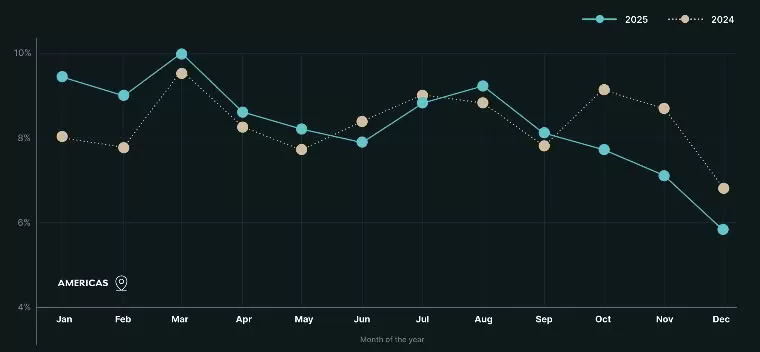
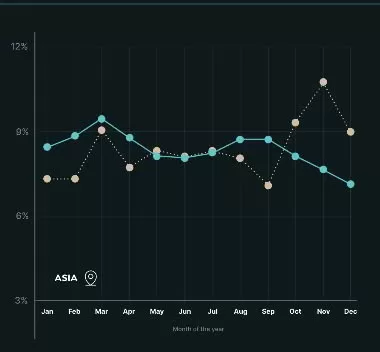
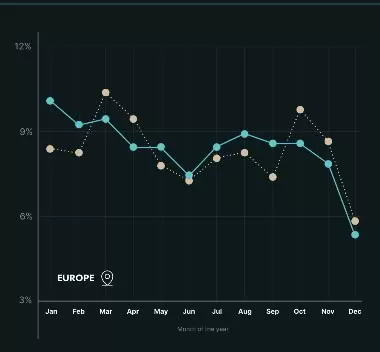
Consumers are increasingly moving visualization to the beginning of their journey.
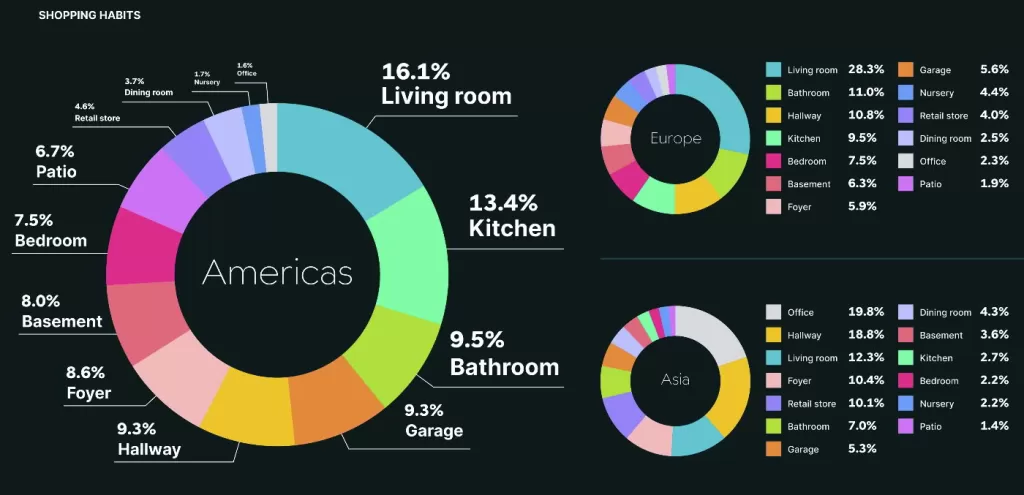
- Personalized Context: 87% of shoppers uploaded a photo of their own room rather than using a stock photo, indicating a clear intent to purchase based on their specific layout and lighting.
- Targeted Rooms: In the Americas, living rooms (16.1%) and kitchens (13.4%) drive the most visualization. In Europe, living rooms hold a significantly larger share (28.3%), and bathrooms outpace kitchens in renovation focus.
Material Trends: The Rise of Performance Surfaces
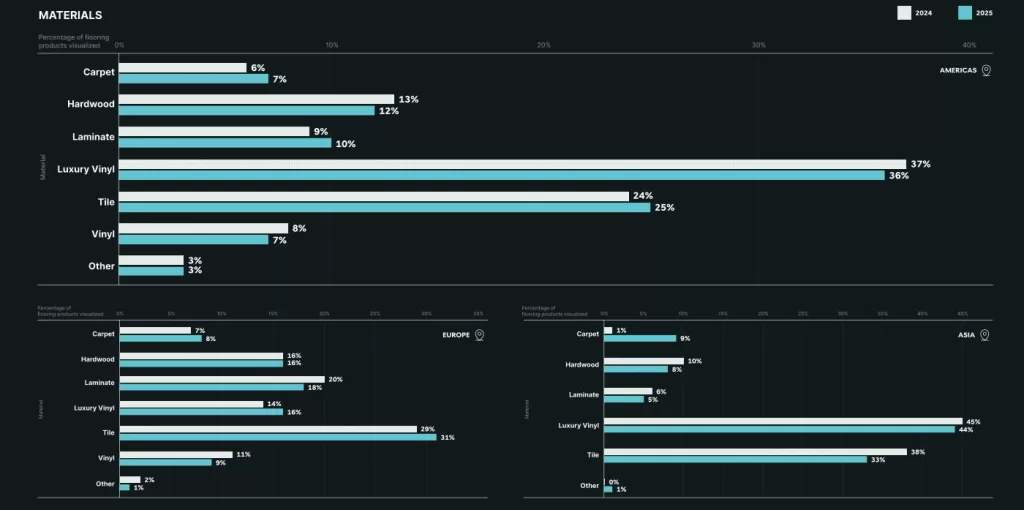
Luxury vinyl and tile continue to lead the market, reinforcing a consumer preference for performance-forward, low-maintenance materials.
Material Popularity by Region (2025 Visualization Share)
| Type of Flooring | Americas | Europe | Asia |
|---|---|---|---|
| Luxury Vinyl | 36% | 16% | 44% |
| Tile | 25% | 31% | 33% |
| Laminate | 10% | 18% | 5% |
| Hardwood | 12% | 16% | 8% |
| Vinyl | 7% | 9% | — |
| Carpet | 7% | 8% | 9% |
Wood-Look Preferences
Within the wood-look category, three finishes account for 91% of global interest in 2025:
- Engineered Wood: 34% (up from 29% in 2024).
- Bamboo: 33% (held steady).
- Oak: 24% (up from 22% in 2024).
Conversely, distinctive species such as hickory fell to 8% (from 13%), while birch and maple have declined to 1% each.
Color Trends: The Dominance of Warm Neutrals
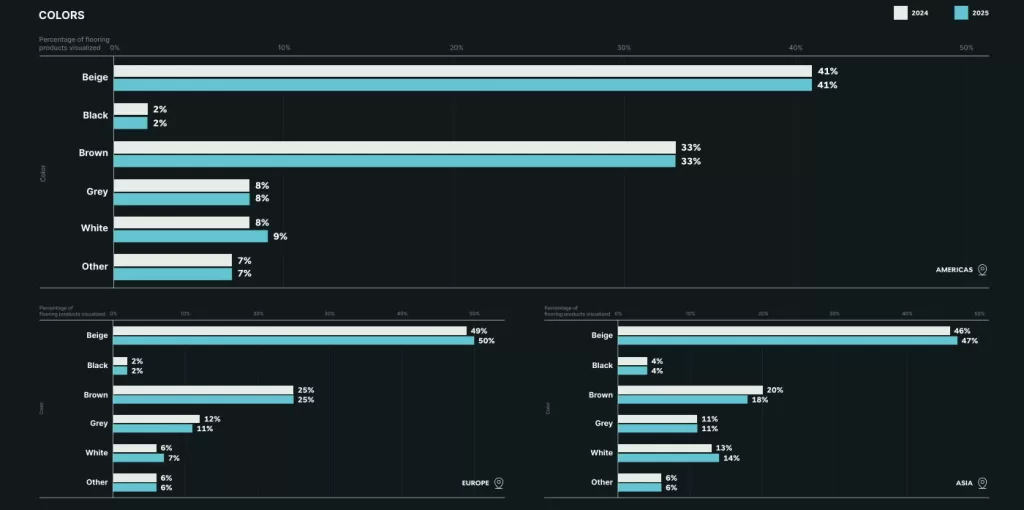
Color preferences remained remarkably consistent heading into 2026, with neutrals providing the versatile foundation for nearly all styles.
Global Color Distribution (2025)
- Beige: Continues to be the top choice globally. It reached 50% in Europe and 41% in the Americas.
- Brown: Remains the secondary neutral at 33% in the Americas and 25% in Europe.
- Grey and White: These colors collectively account for approximately 17-20% of the market. White is seeing a modest upward trend (reaching 9% in the Americas), suggesting a move toward brighter aesthetics.
U.S. State-Level Insights
Regional climate and culture influence neutral preferences. In California and Florida, beige significantly over-indexes, signaling a preference for “airier” looks. In these same markets, brown preference softens, representing a neutral trade-off where shoppers lean toward beige in warmer, high-light environments.
Strategic Implications for Brands and Retailers
The report emphasizes that “data-driven decisions are a competitive advantage,” particularly when the market is shifting. To succeed in 2026, the document outlines several actionable strategies:
- Reduce Friction: The winners in a selective market are those who make the path to purchase effortless. This involves placing visualization entry points earlier in the journey (on Product Listing Pages and Product Detail Pages).
- Leverage Shopper Signals: Use visualization data to inform product strategy, merchandising, and go-to-market plans before competitors.
- Omnichannel Integration: Shoppers rarely stop at one surface. Platforms that allow consumers to plan across floors, rugs, countertops, and paint in a single experience drive higher engagement.
- High-Intent Advertising: Utilizing platforms like Roomvo Ads to place products directly inside real estate listing photos captures buyers at the exact moment they are imagining renovations.
Product Strategies Outtake from Roomvo Global Flooring Trends Report
As we approach 2026, the flooring industry is navigating a fundamental pivot in consumer behavior: the transition from a broad, casual browsing market to a highly selective, high-intent consumer base. For retail leaders, this shift requires a total reconfiguration of strategy. Success no longer hinges on capturing sheer volume but on the precision with which a brand can convert specific “shopper signals” by meeting the consumer at the exact inception of their renovation vision.
High-Performance Product Strategy: Materials and Species
Aligning inventory with “performance-forward” and “low-maintenance” consumer preferences is the cornerstone of a resilient 2026 product strategy. Material visualization data serves as a critical leading indicator; by analyzing what consumers are testing in virtual environments today, retailers can accurately engineer their future sales floor for maximum velocity.
Global Material Dominance
Luxury Vinyl Flooring and Tile remain the anchors of the global market, collectively accounting for 61% of visualizations. However, regional nuances are intensifying:
- Americas: Luxury Vinyl (36%) and Tile (25%) maintain a firm lead.
- Europe: There is a distinct and strengthening preference for Tile, which rose to 31% share, significantly outpacing Luxury Vinyl at 16%. Notably, traditional Vinyl and Laminate Flooring continue to see a decline in this region.
Engineering the Wood-Look Portfolio
The “wood-look” aesthetic remains the dominant consumer desire, but interest is concentrated in a narrow selection of high-performing finishes.
- Global Wood-Look Winners (91% combined share):
- Engineered Wood: The primary growth leader, rising to a 34% share (a 5% year-over-year increase).
- Bamboo: A consistent but stagnant performer, holding steady at 33%.
- Oak: A classic finish showing continued growth at 24% share.
Strategic Recommendation for Declining Species
Data shows a significant softening of interest in more distinctive wood species. Hickory has fallen to 8% globally (down from 13%), while Birch and Maple have bottomed out at just 1% each. It is recommended that retailers strategically deprioritize these species in primary merchandising displays and showroom vignettes, reallocating that space to high-velocity Engineered Wood Flooring and with oak design collections.
Aesthetic Strategy: Neutral Foundations and Regional Nuance
Neutrals serve as the “versatile foundation” of modern home design, providing the timeless backdrop consumers require for high-ticket renovations. However, successful 2026 inventory management requires a sophisticated understanding of regional color “over-indexing” to remain relevant.
The Neutral Baseline
In the Americas, the palette remains firmly rooted in safety and longevity. Beige, Brown, Grey, and White account for 91% of all flooring visualizations. This concentration underscores a consumer preference for versatile foundations that endure beyond seasonal trends.
Regional Color Mapping: The “Neutral Trade-Off”
Inventory must be tailored to specific geographic pull, particularly within the U.S. market:
- California & Florida: These markets significantly over-index for Beige, signaling a move toward lighter, “airier” aesthetics.
- Broader U.S. Markets: Brown continues to hold its lead outside of these sun-belt exceptions, showing a distinct geographic preference divide.
Evaluating the “White Shift” Flooring Demands
Data indicates a persistent move toward “brighter looks,” but the intensity varies by region.
- Asia: Leading the global “White Shift” with a dominant 14% share.
- Americas: White has reached 9% of visualizations.
- Europe: White is inching upward more modestly, reaching 7% (up from 6%). Retailers should incorporate “bright-neutral” options in their 2026 assortments to capture this emerging preference for high-contrast, airy interiors.